
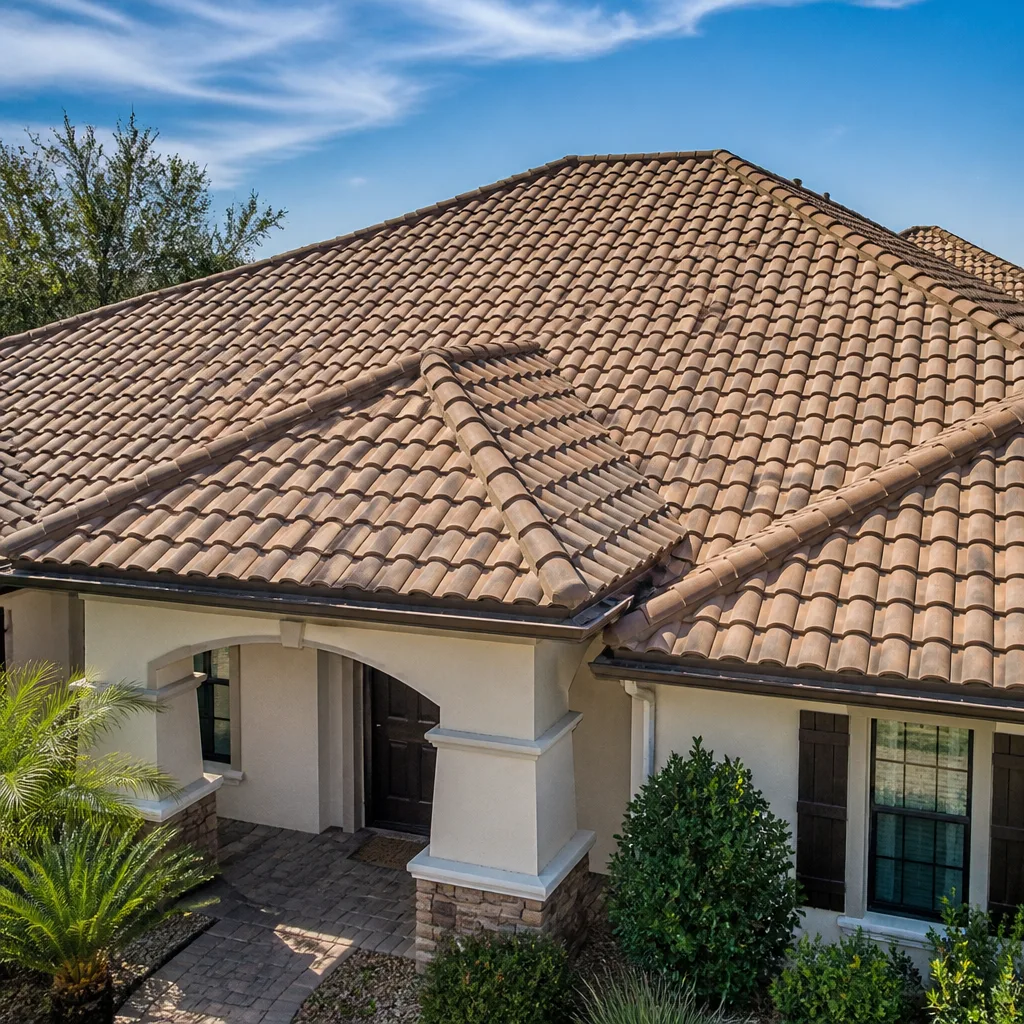
 Tile roofing
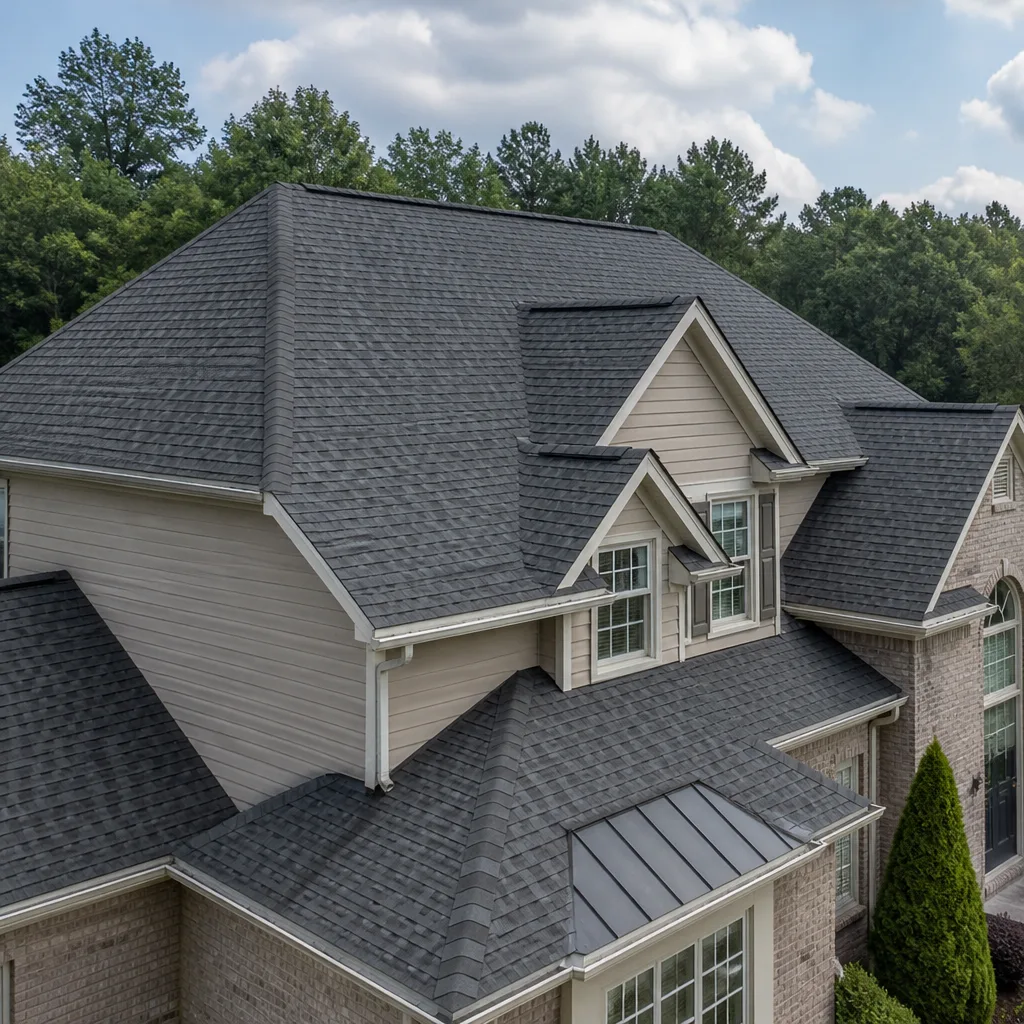 Architectural shingles
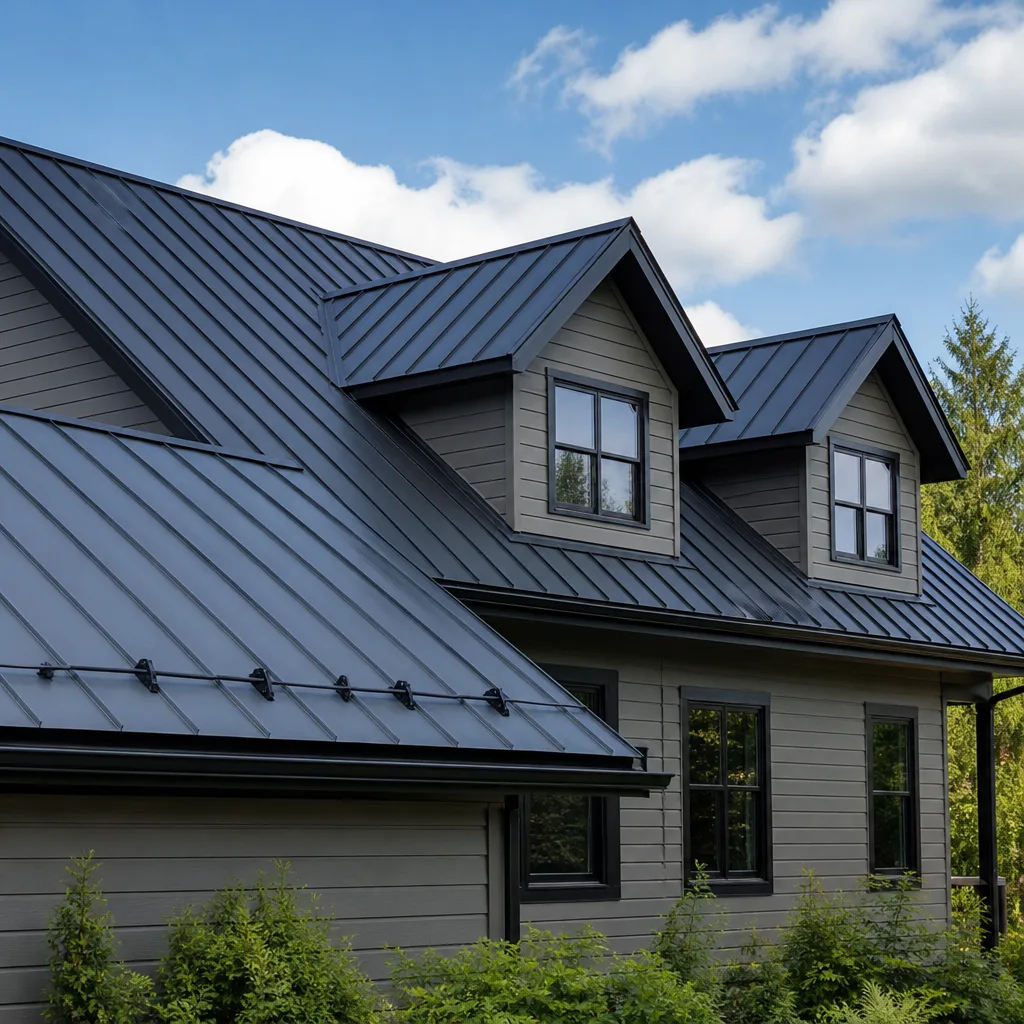 Metal roofing
 GAF
GAF Owens Corning
 Flat & low-slope
Free roof inspection with deck photos before we talk money - GAF and Owens Corning certified installation
GAF Flashing Replacement: The San Diego Owner’s Guide
If your GAF flashing has corroded, pulled away from the chimney or wall, or started letting water into the house, we stock and install GAF-compatible flashing replacement throughout San Diego, typically at an installed price between $350 and $950 per flashing location depending on what’s behind it. Most flashing replacements we handle are completed the same day the crew arrives, and you’ll know the price before we touch your roof. The way owners usually find out is ugly: a brown stain on the ceiling after a winter rain, or a roofer pointing at rusted metal during an unrelated repair and saying, “that’s your leak.”
Flashing is the metal transition piece that moves water away from the places your roof gets interrupted, like chimneys, skylights, walls, and plumbing vents. GAF makes their flashing to work with their shingle systems, and when the flashing fails, the shingles can be in perfect shape while water still finds its way inside. In San Diego’s salt air near the coast and hard sun inland, flashing fails faster than the shingle around it, and most homeowners don’t notice until the drywall tells them.
Which GAF Models This Applies To
GAF flashing replacement applies to any roof built with GAF shingle systems, but the specifics matter more than the brand name on the shingle bundle. The flashing we replace is sized and shaped to match the roof penetration it protects, not the shingle series. That means a home with GAF Timberline HDZ shingles in North Park needs the same step flashing at a sidewall as a home with GAF Royal Sovereign in Chula Vista, but the gauge of metal, the height of the base, and the method of weaving it into the shingle courses all change based on roof pitch and local exposure.
Here’s the compatibility gotcha most people miss: GAF shingles carry a lifetime limited warranty, but the flashing at penetrations is often installed by the original roofer using generic galvanized steel from a supply yard. That flashing was never a GAF product at all. When we do a GAF flashing replacement, we match the replacement metal to what’s actually on the roof, verify the underlayment beneath it, and use either OEM-spec GAF accessory flashing when the original warranty documentation calls for it, or a quality aftermarket equivalent in a heavier gauge than what was originally installed. Most of the flashing we pull off San Diego roofs is 26-gauge; we install 26-gauge minimum on walls and 24-gauge or heavier at chimneys and valleys where water volume is highest.
We also stock flashing-compatible parts for Owens Corning and CertainTeed systems, so if the roof was later reroofed with a different brand, we’re not forcing a mismatched part onto it. Tilehurst Roofing San Diego is an independent local roofing company and not affiliated with GAF, which is exactly why we can tell you when a GAF-branded accessory matters and when a heavier aftermarket piece is the better call.
Styles & brands we work with
Signs Your GAF Flashing Replacement Is Failing
- Water stains on ceilings or walls near chimneys, skylights, or where the roof meets a vertical wall. This is the classic flashing failure signature. Water travels along the underside of the roof deck, so the stain often appears several feet from the actual leak point, which is why a visual roof inspection without removing shingles can miss it.
- Rusted or corroded metal visible at the roof line. In San Diego’s coastal neighborhoods like Point Loma and Ocean Beach, salt air corrodes galvanized flashing in as little as 12 to 15 years. Once rust blooms through the zinc coating, the metal underneath is losing thickness every wet season, and pinholes follow. If you can see rust from the ground, the flashing is already compromised.
- Caulk that’s cracked, separating, or missing around the base of pipes, vents, or chimney caps. Caulk is a maintenance item that should never be the primary water barrier on a roof penetration. When we see multiple layers of old caulk, that means someone has been chasing a leak without fixing the flashing underneath.
- Gaps between flashing and the wall or chimney where daylight or a flat tool can pass through. Step flashing and counterflashing must overlap in the correct order to shed water. When the metal pulls away due to thermal movement or failed fasteners, water runs straight behind it. This is especially common on south-facing walls in San Diego, where the daily expansion and contraction cycle is brutal.
- Granules from shingles collecting in gutters directly below a flashing point. Water that gets under flashing accelerates the wear on the shingles directly below it. If one section of gutter always has more granule buildup than the rest, the flashing above it deserves a closer look.
See the difference
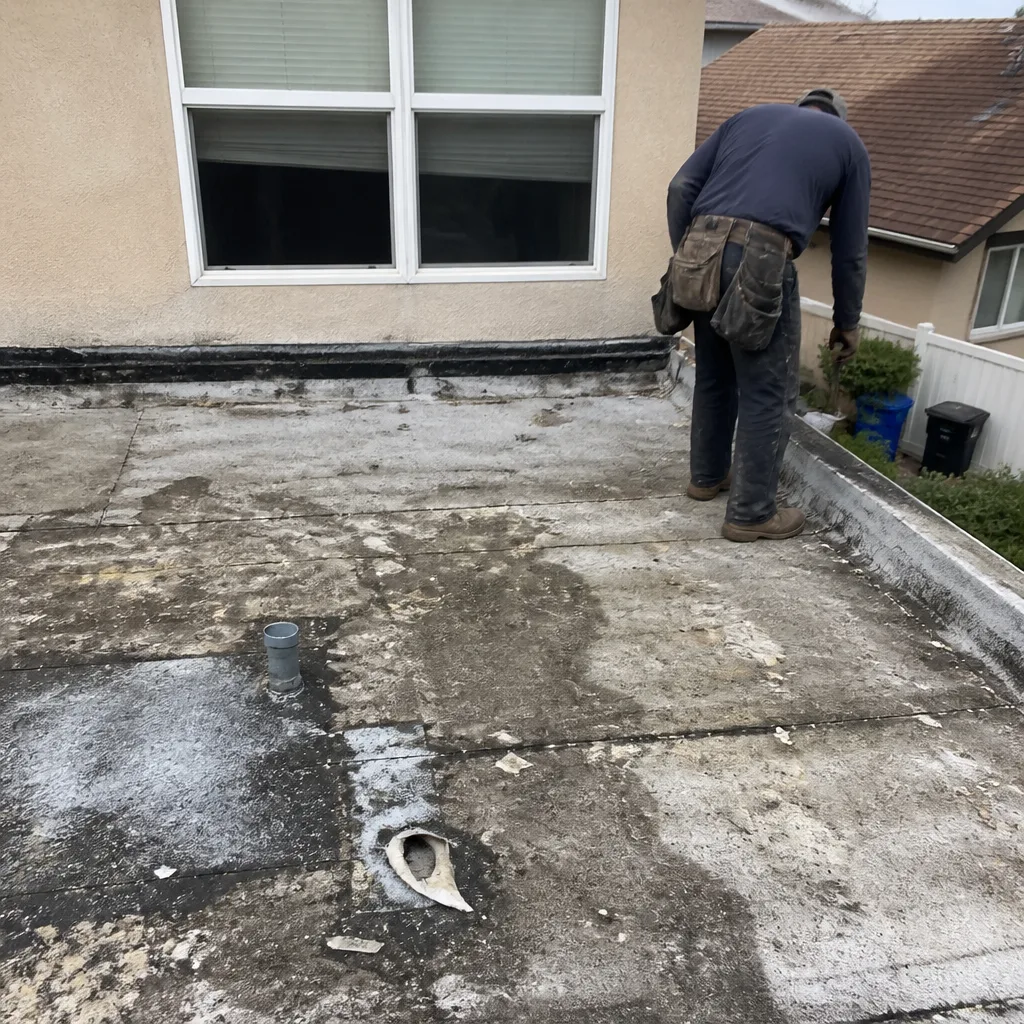 Before
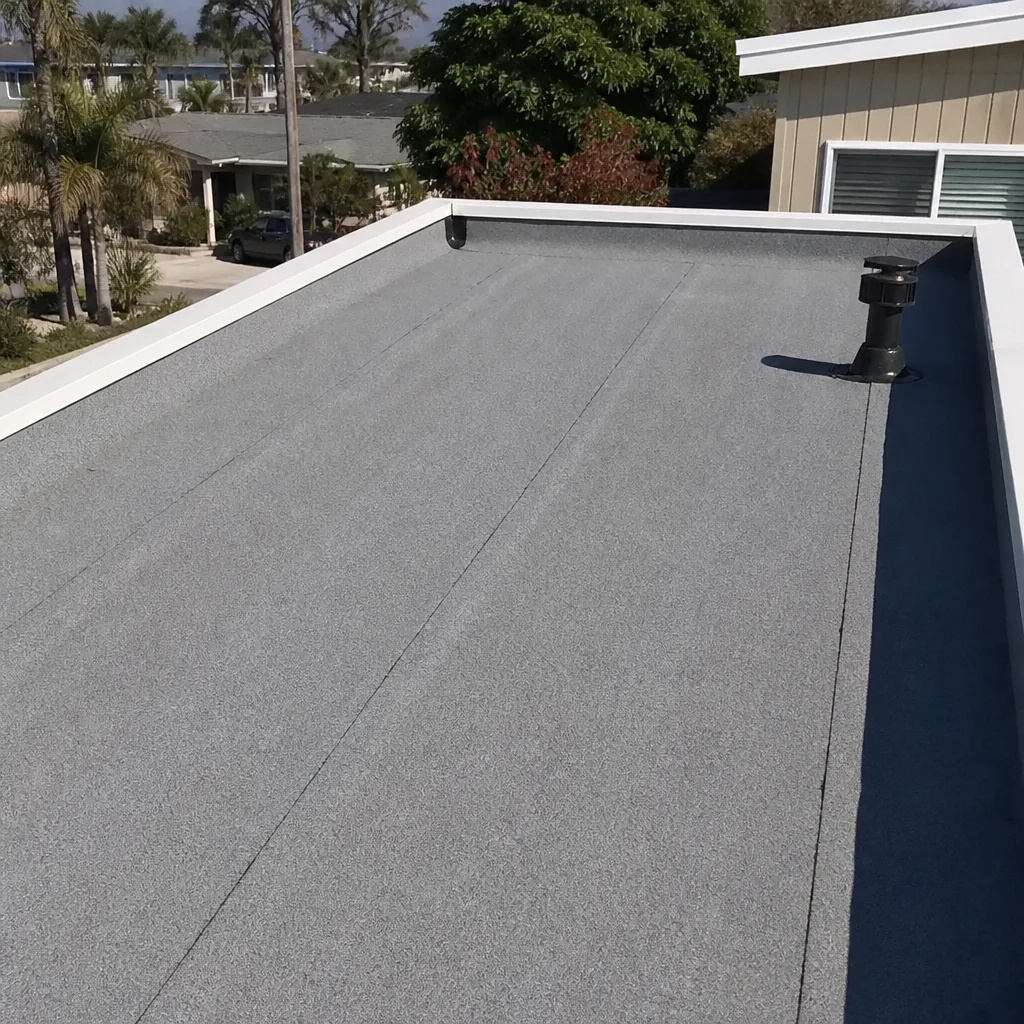 After
After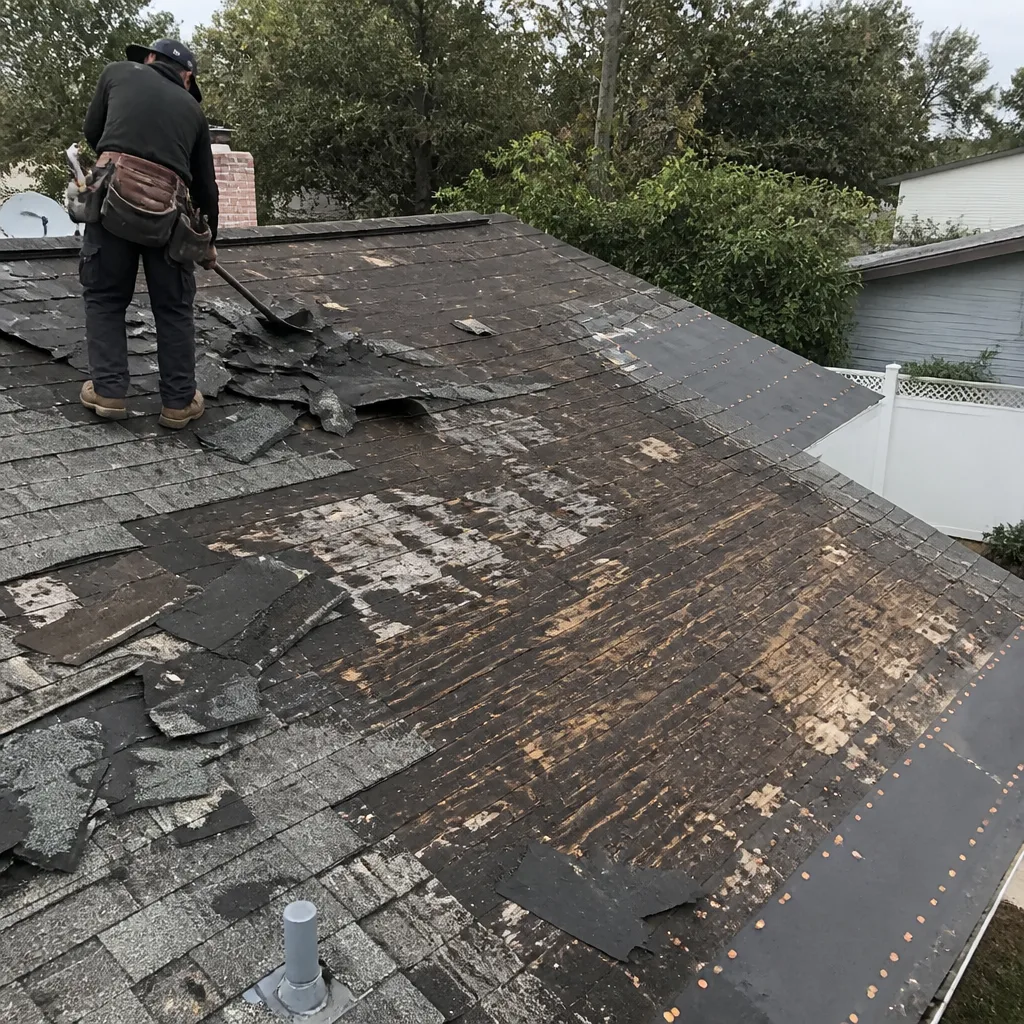 Before
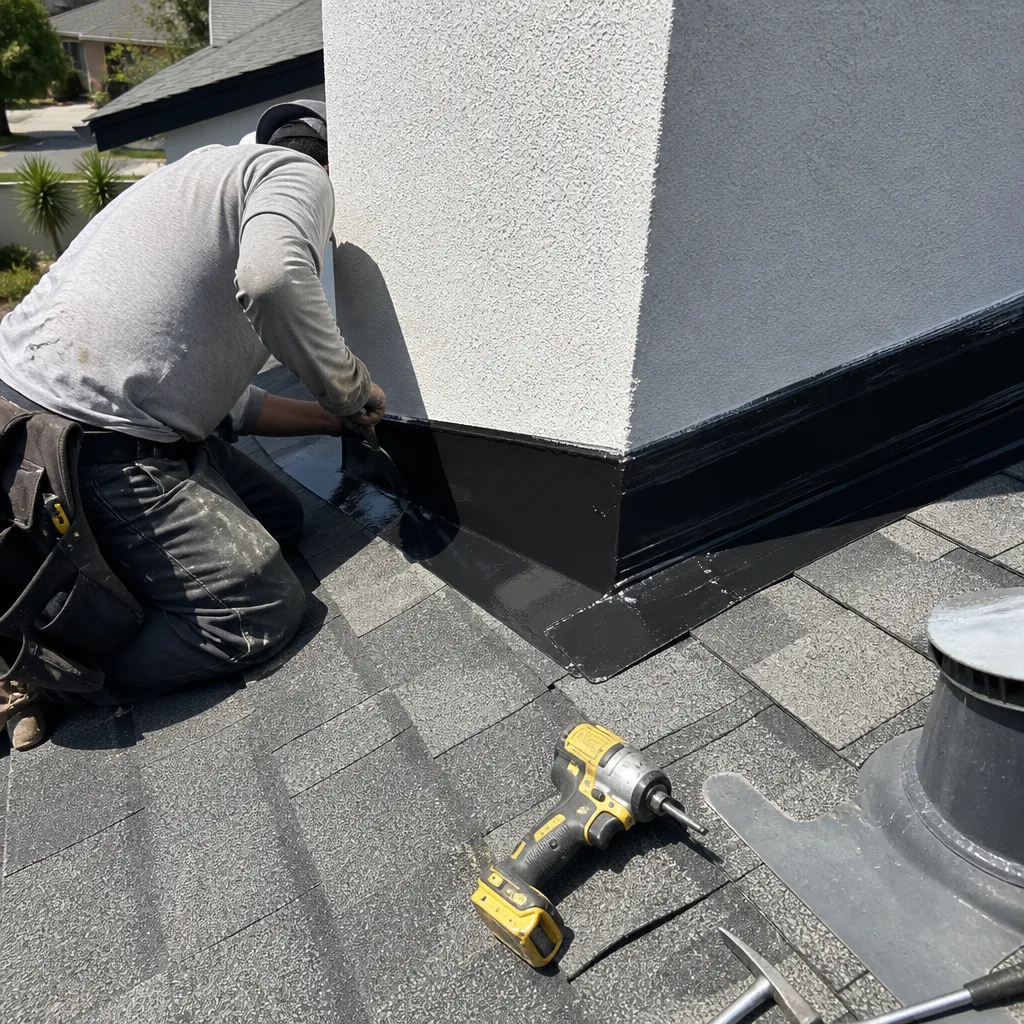 After
After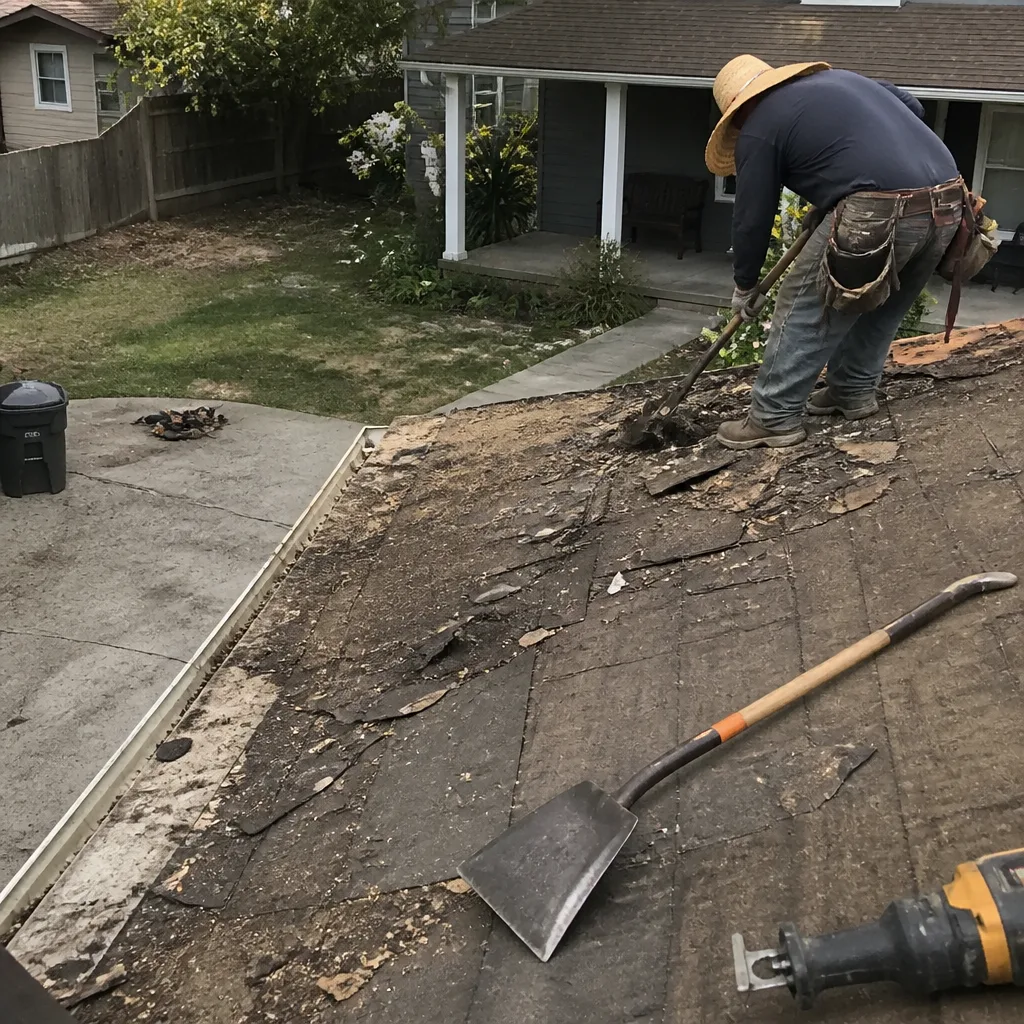 Before
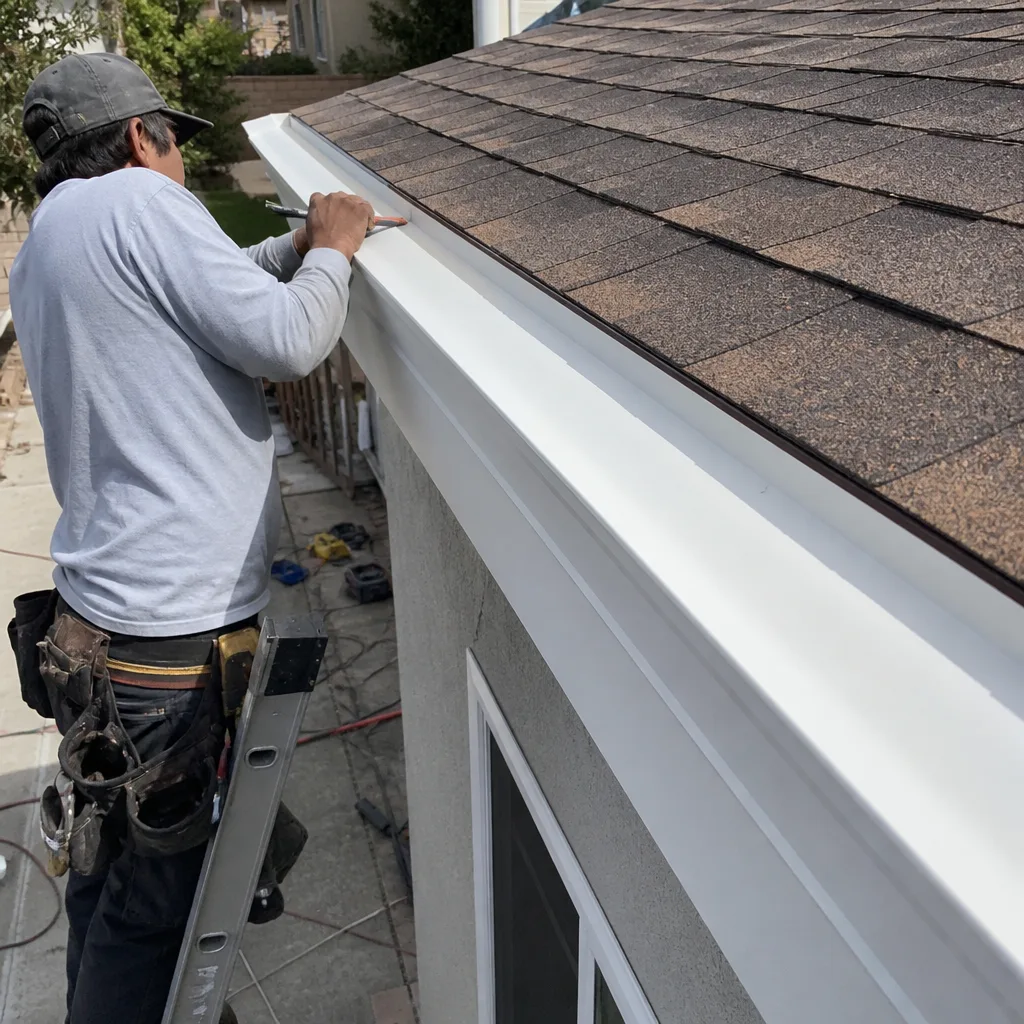 After
AfterReplacement Cost & What’s Included
In San Diego, GAF flashing replacement typically runs $350 to $950 per flashing location installed. On the low end, a plumbing vent pipe flash or a short section of step flashing replacement with easy access and good roof deck condition runs $350 to $475. A chimney with counterflashing, a skylight that needs the flashing kit replaced and the roof deck checked at the curb, or a wall-to-roof transition that requires lifting shingles and replacing underlayment runs $600 to $950 or more.
What drives the difference: the type of penetration, the pitch and height of the roof, whether the roof deck under the flashing has rotted and needs a patch, and which material is called for, galvanized steel, aluminum, or in some coastal and high-end cases, copper. Every Tilehurst Roofing San Diego flashing replacement includes lifting the surrounding shingles without damaging them, removing the old flashing and failed fasteners, inspecting and repairing the roof deck as needed, installing the new flashing with the correct fasteners and sealant, resetting the shingles, and hauling away the old metal.
You get a written price before any work starts, and a written guarantee on the repair before the crew leaves. If it fails inside the guarantee period, we come back and make it right at no charge under the 365-Day Done Right Promise. That’s the Kingswell Way: say the price before the work, show up in the window we gave, leave the place cleaner than we found it, put the guarantee in writing.
DIY or Call Us?
What you can safely check yourself: look for visible rust, gaps, or missing caulk from the ground or a ladder with a spotter holding it. Take photos. Note which direction the roof slope faces and where interior stains show up. That information helps us diagnose faster.
What we don’t recommend doing yourself: lifting shingles to inspect or replace flashing, cutting and bending flashing on a sloped roof, or removing counterflashing from a chimney. The reason is structural. Flashing work means you are on a sloped surface, working at height, and making holes that, if sealed wrong, leak worse than before. Roof work on a ladder or steep pitch ranks among the most common sources of serious home-project injuries. The flashing itself isn’t the danger. The roof it’s on is. We’ve walked onto more than one San Diego roof where a homeowner’s repair attempt left the flashing worse than it started, and the water damage doubled before we got the call.
Greg Holloway and our crew handle GAF flashing replacement on roofs all over San Diego, from bungalows near Balboa Park to larger homes out in Santee, and we show up with a written price before anyone touches a ladder. Call (619) 393-3877 and we’ll schedule the inspection.
FAQs
Galvanized roof flashing in San Diego typically lasts 15 to 25 years, depending on distance from the coast. Within a few miles of the ocean, salt air shortens that to 12 to 18 years. Copper flashing can last 50 years or more but costs significantly more. If your home is 20 years old and still has original flashing, it’s at the end of its expected service life even if the shingles above it still look fine. Call (619) 393-3877 and we’ll schedule an inspection.
Sometimes, if the damage is limited to a small crack or a failed section of sealant and the surrounding metal is still structurally sound, a patch can buy you a few years. But patched flashing fails again, and the second failure usually causes more interior and decking damage than the first, because you trust the repair and stop looking. When the flashing has rusted through, pulled away, or shows pinholes, replacement is the honest fix. Call (619) 393-3877 for an exact quote, estimates are free.
A single flashing location, like a vent pipe or a short wall-to-roof transition, usually takes 2 to 4 hours including setup and cleanup. A chimney with full counterflashing removal and replacement, or multiple flashing locations, takes 4 to 8 hours. Most flashing replacements are done the same day. We’ll give you a written time window before we start, and we show up in it.
We stock common flashing profiles and materials on the truck, including vent pipe flashings, step flashing in both galvanized and aluminum, L-flash, and counterflashing base pieces. For uncommon penetrations, lead flashing work, or specific OEM accessory flashing that matches an active GAF warranty, we source the part and schedule the install once it arrives. Material options come from seven leading manufacturers including GAF, CertainTeed, Owens Corning, IKO, Atlas, Tamko, and Boral, so the part fits the home, not just what happens to be in the truck. Call (619) 393-3877 to schedule your free estimate.
Written by Greg Holloway, Owner, Tilehurst Roofing San Diego at Tilehurst Roofing San Diego, serving San Diego and nearby areas.