
Last updated October 17, 2026
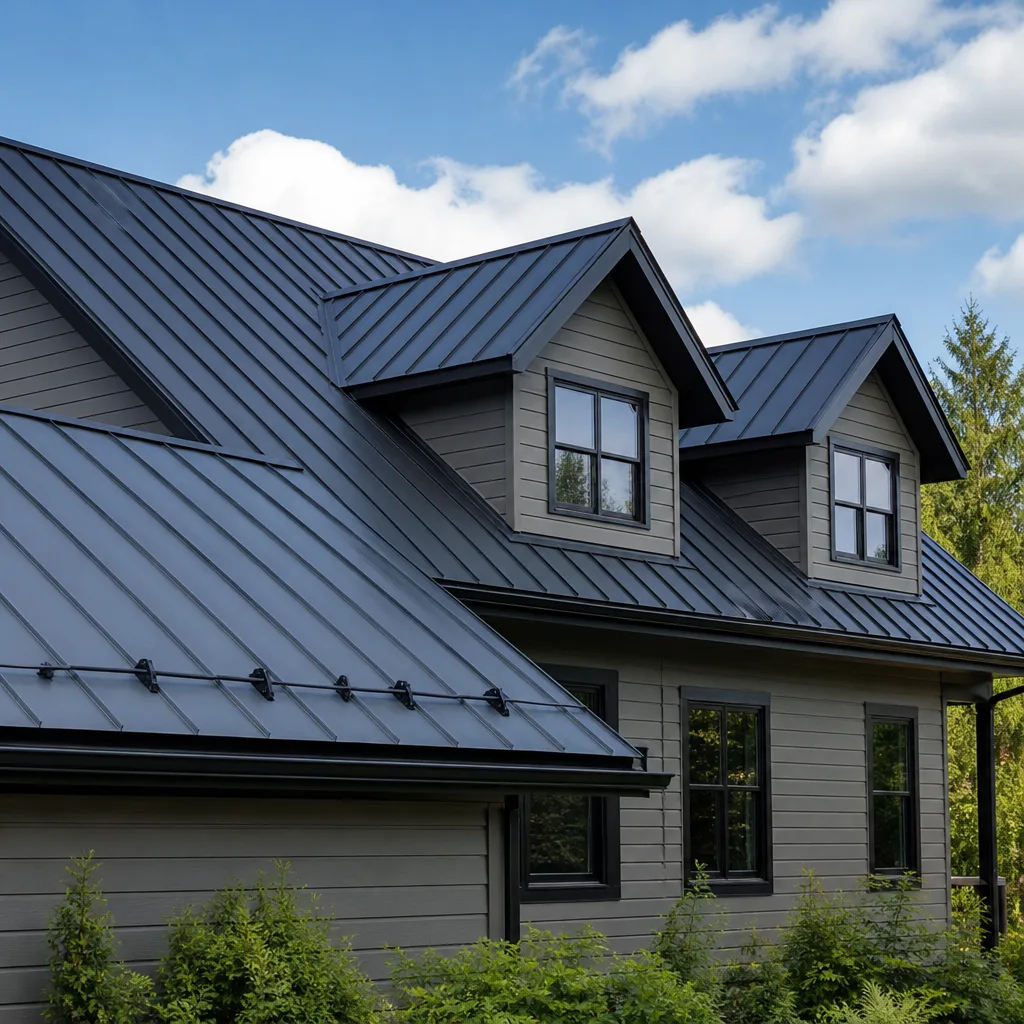 Metal roofing
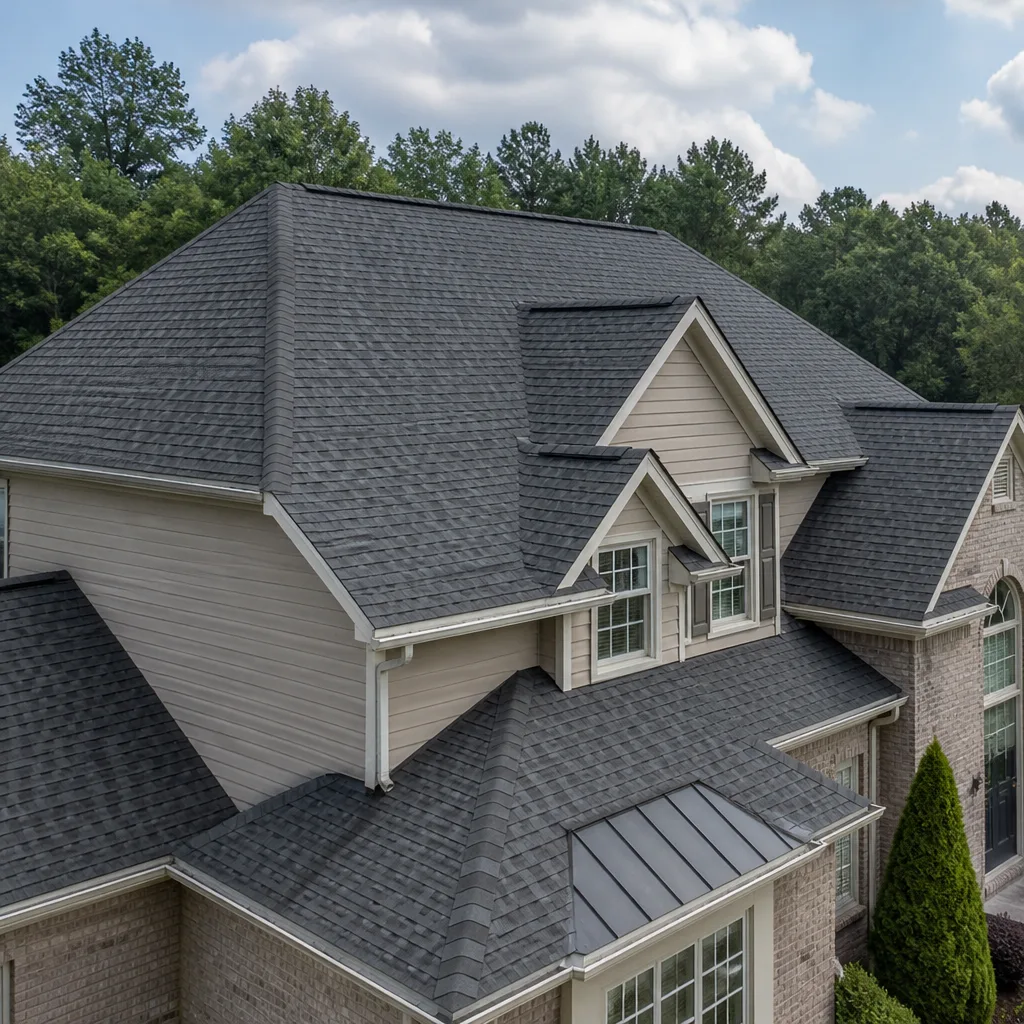 Architectural shingles
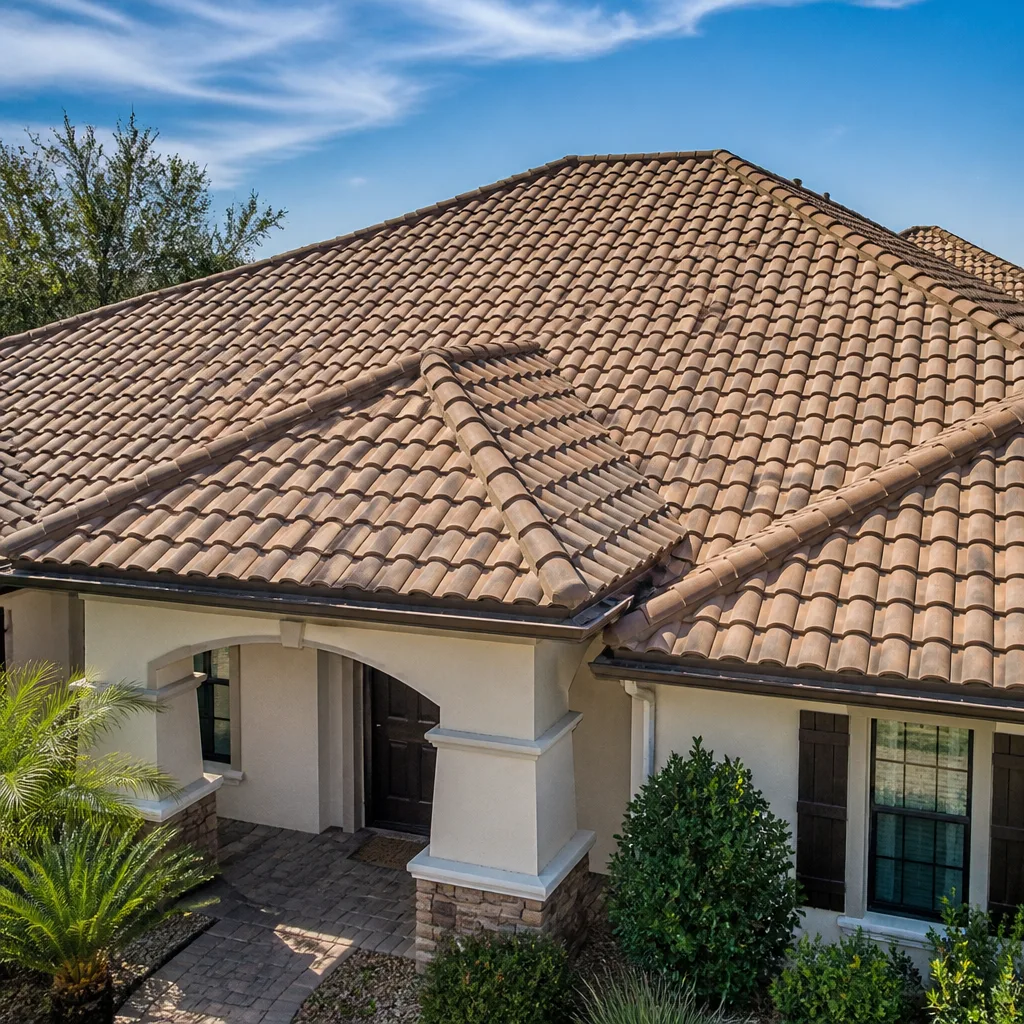 Tile roofing
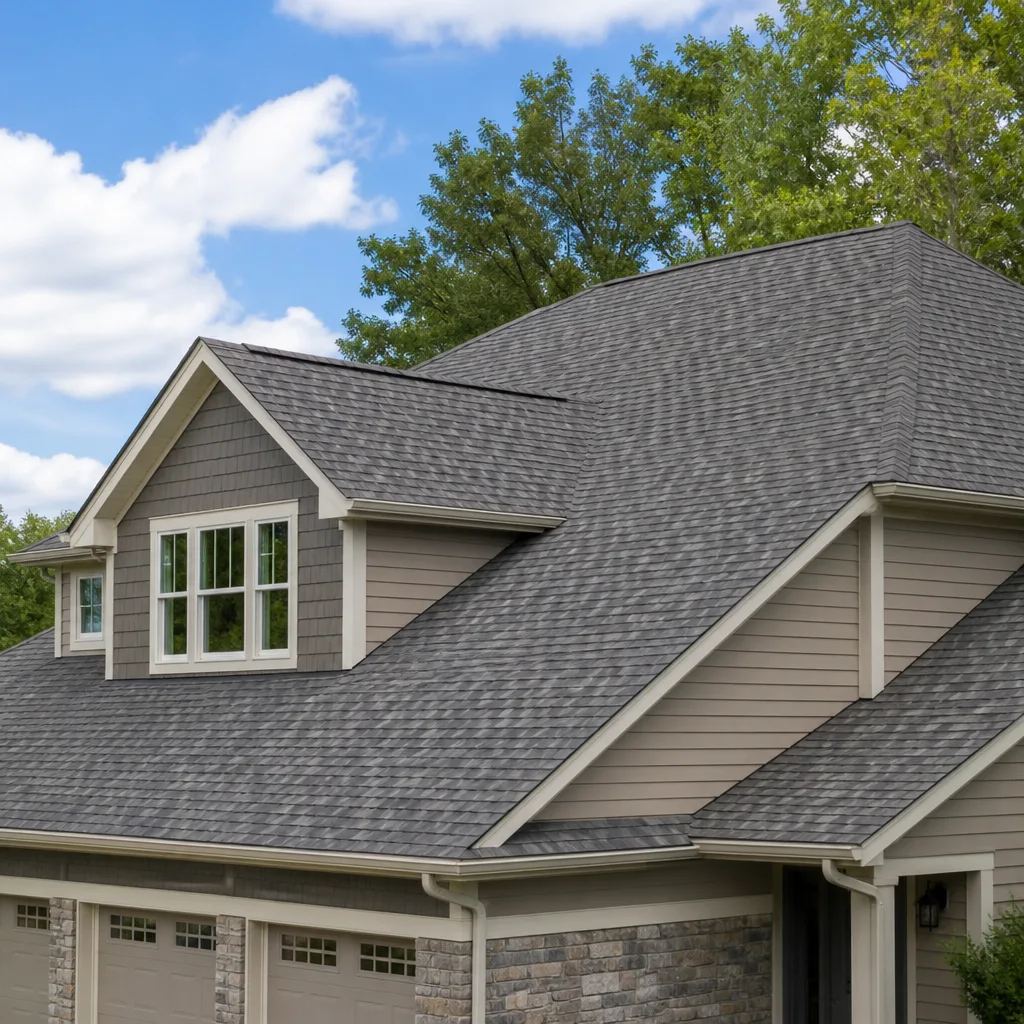 GAF
GAF Owens Corning
 Flat & low-slope
Free roof inspection with deck photos before we talk money - GAF and Owens Corning certified installation
The Complete Guide to Roofing in San Diego
San Diego gets roughly 266 sunny days a year, and that sunshine is one of the top reasons roofs here fail faster than homeowners expect. UV exposure breaks down asphalt binders quietly, long before a single leak appears. This guide and our more guides & resources explain how San Diego’s specific climate, building codes, and neighborhood conditions shape every roofing decision you’ll make. You’ll learn what actually drives roof longevity in this city, what different materials cost, which installation details matter most, and how to avoid the mistakes that leave homeowners paying twice.
Quick Answer
Roofing in San Diego means choosing materials and installation methods built for intense UV exposure, daily marine-layer moisture cycles, and occasional Santa Ana wind events, not just rain. Asphalt shingle roofs here typically last 18 to 25 years, tile roofs 40 to 60 years, and flat roofs 12 to 20 years depending on material and installation quality. A full replacement on a 1,500-square-foot home runs between $9,000 and $22,000, while targeted repairs range from $350 to $1,800 depending on what’s failed.
Styles & brands we work with
Table of Contents
- San Diego’s Roof Weather: Why Sunshine Is Harder on Roofs Than Rain
- Roofing Materials That Actually Work in San Diego
- Tile Roofs in San Diego: What Makes Them Last 40 Years
- Santa Ana Winds and San Diego’s Wind Load Standard
- Neighborhood by Neighborhood: Coastal, Inland, and Hillside Roofing Differences
- What a Full Roofing Project Timeline Looks Like in San Diego
- Real Numbers: What Roofing Costs in San Diego Right Now
- Common Mistakes to Avoid
- When to Call a Professional
- Frequently Asked Questions
San Diego’s Roof Weather: Why Sunshine Is Harder on Roofs Than Rain
Most homeowners think rain is the enemy. In San Diego, the real damage comes from three forces that work together over years, not days.
First, ultraviolet radiation. San Diego sits at roughly 32.7 degrees north latitude, which means sunlight arrives at a steep angle for much of the year. That concentrated UV exposure degrades asphalt shingles by breaking down the hydrocarbons in the bitumen, the sticky petroleum-based binder that holds the shingle together. You can see it happening: shingles lose their granule coating, the surface turns gray and chalky, and small cracks appear along the edges. By the time you notice, the shingle has already lost much of its protective capacity.
Second, the marine layer. San Diego’s famous coastal fog doesn’t just make June mornings gray. It deposits a thin film of moisture on roof surfaces nearly every night in coastal and near-coastal neighborhoods. That moisture gets pulled into small gaps and cracks through capillary action. When the sun comes out and surfaces heat up, the water expands as vapor and forces those gaps wider. This daily cycle, repeated hundreds of times a year, gradually breaks down underlayment, loosens fasteners, and separates flashing from roof penetrations. Roofs in Clairemont, Point Loma, and Ocean Beach face this stress even during dry years.
Third, salt air. Within roughly three miles of the coast, airborne salt accelerates corrosion on metal flashing, fasteners, and any exposed steel components. Galvanized fasteners rust faster here than anywhere east of Interstate 5.
In our experience at Tilehurst Roofing San Diego home, roofs in San Diego rarely fail from a single storm. They fail from accumulated exposure: five years of UV breakdown, three years of moisture cycling, one Santa Ana wind event that finds the weak spot. That’s why regular inspections catch problems before they compound.
Roofing Materials That Actually Work in San Diego
What you put on your roof matters less than how it’s installed, but material choice still drives your budget, your maintenance schedule, and how long your roof lasts. Here’s what works in San Diego’s climate and what you should know before choosing.
Asphalt Shingles
Asphalt remains the most common roofing material in San Diego because it balances cost and availability. A properly installed architectural shingle roof here lasts 18 to 25 years. The key word is properly installed. San Diego’s heat demands shingles rated for high-wind zones, and the marine layer demands quality underlayment that can handle daily moisture cycles without cracking.
Expect to pay between $6 and $9 per square foot installed for architectural shingles in San Diego, depending on roof pitch, tear-off costs, and the manufacturer. We install shingles from Owens Corning and Atlas regularly, both of which make high-wind-rated products that handle Santa Ana conditions well.
Concrete and Clay Tile
Tile roofs dominate San Diego for good reason. Concrete and clay tile reflect heat, resist UV damage, and last 40 to 60 years when the underlayment is done right. Many homes built in the 1970s and 1980s still have their original tile, though the underlayment beneath often needs replacement. Tile costs more upfront, typically $12 to $22 per square foot installed, but spreads that cost over a much longer lifespan.
Flat and Low-Slope Roofs
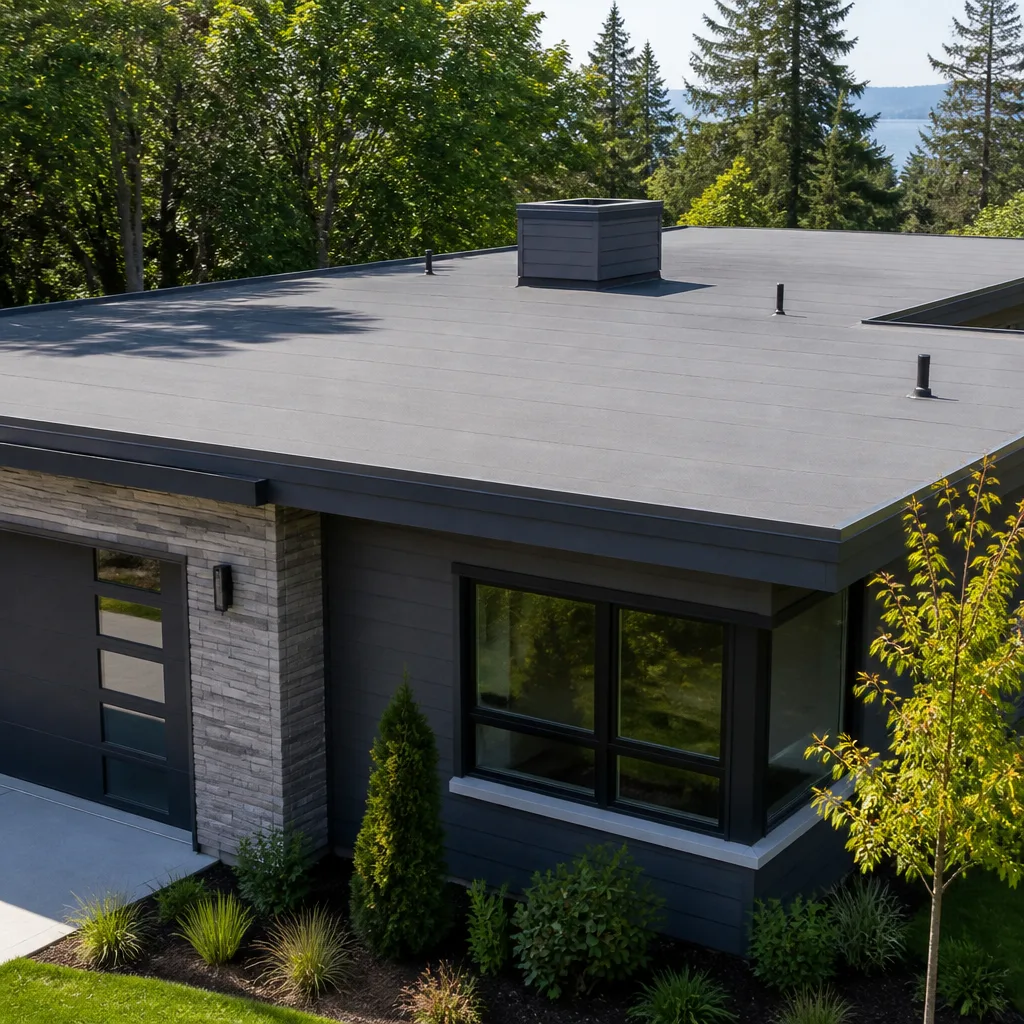
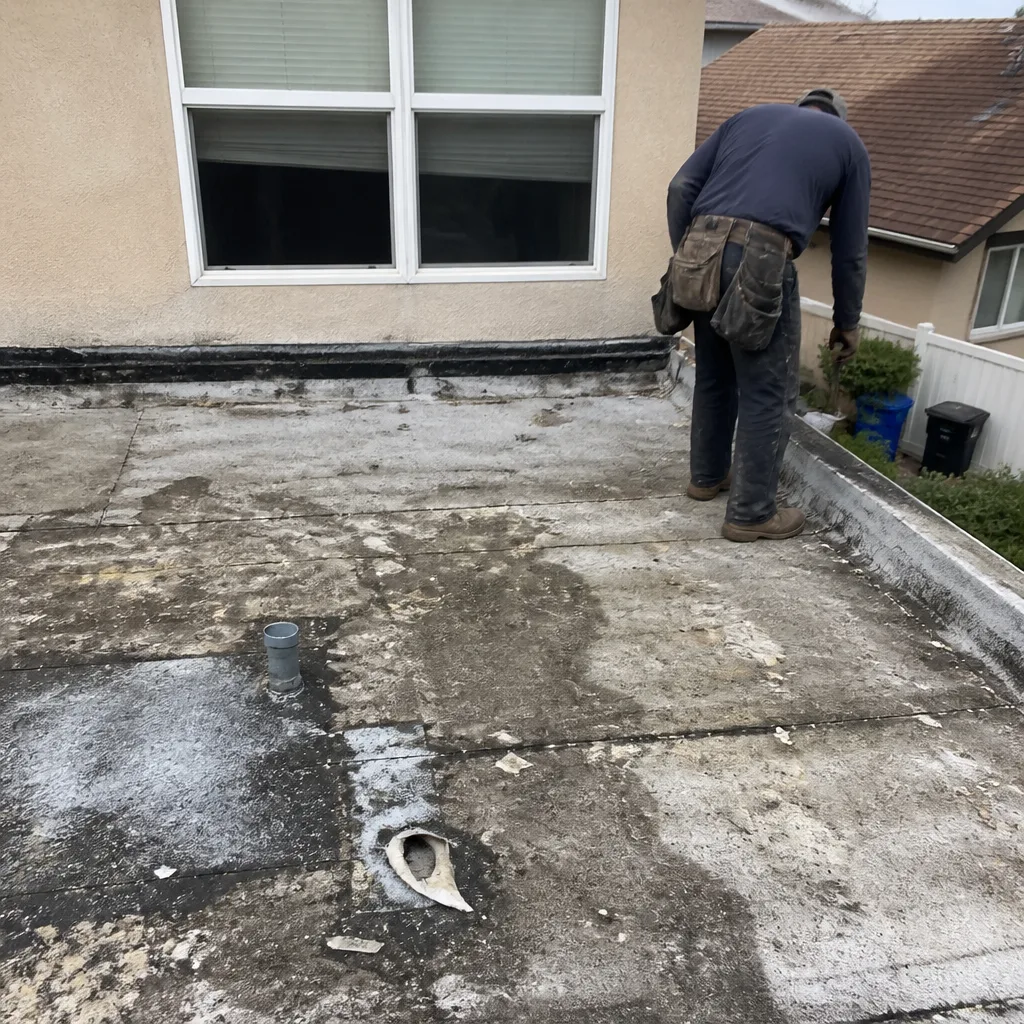
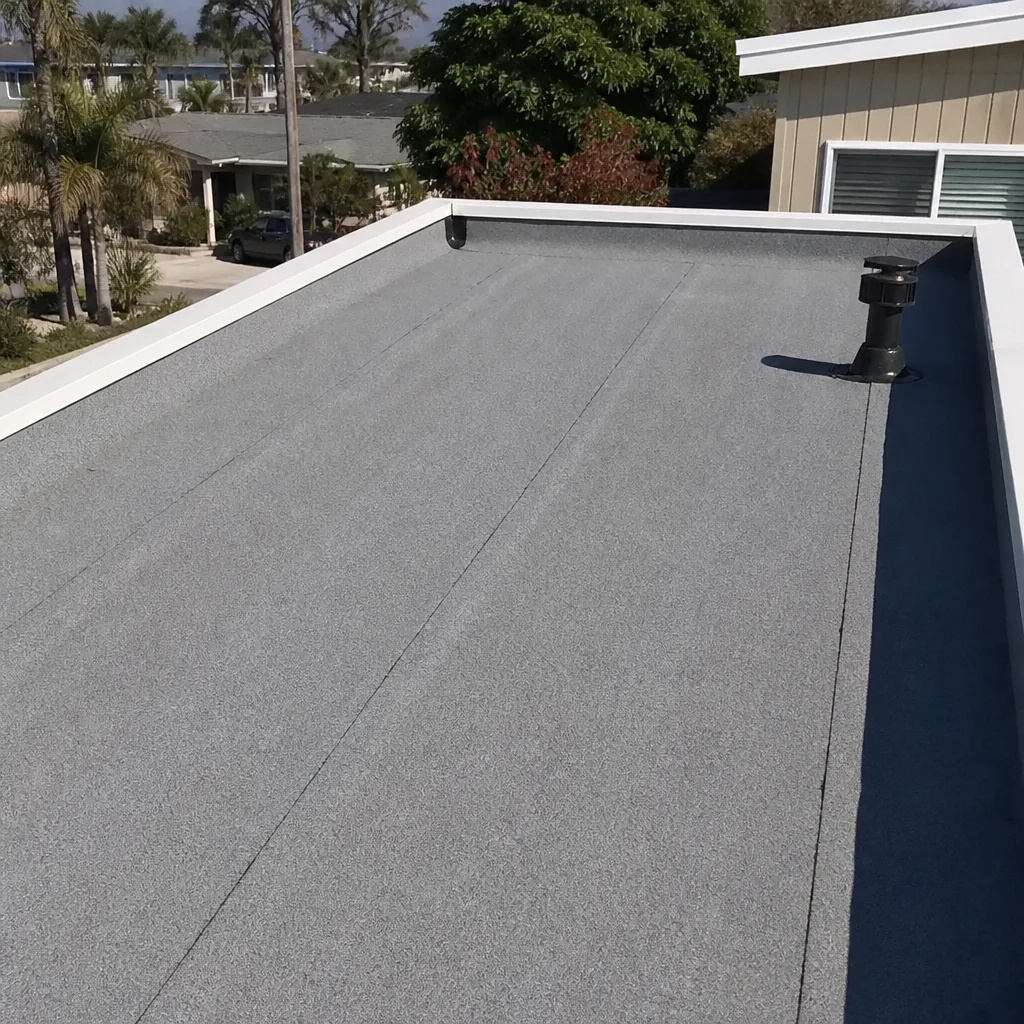
Mid-century homes in San Diego, especially in neighborhoods like Clairemont and parts of La Mesa, often have flat or low-slope roofs that need membrane systems. TPO, PVC, and modified bitumen are common choices. In San Diego’s heat, lighter-colored membranes make a measurable difference in attic temperatures. Expect flat roof replacement to run $8 to $14 per square foot.
Metal Roofing
Standing seam metal roofing handles San Diego’s UV exposure better than almost anything else. It reflects heat, carries a 30 to 50 year lifespan, and performs well in high wind. The trade-off is cost: $14 to $20 per square foot installed. Metal makes the most sense on hillside homes where fire resistance matters and on properties where the owner plans to stay for decades.
Tile Roofs in San Diego: What Makes Them Last 40 Years
Tile roofs in San Diego have a reputation for lasting nearly forever, and the tile itself often does. The failure point is almost always what’s underneath. A tile roof is only as good as its underlayment, battens, and fastener setup.
Here’s what separates a 40-year tile roof from one that needs work in 15.
Underlayment weight matters more than most homeowners realize. San Diego’s marine layer means moisture gets trapped between tile and decking. Lightweight 15-pound felt breaks down quickly under those conditions. We specify a minimum of 30-pound felt, and more often a synthetic or double-layer system, on every tile reroof we do in San Diego. Heavier underlayment costs a few hundred dollars more and adds a decade or more of service life.
Battens make the difference in airflow. Properly installed counter-battens create a small air gap between the tile and the underlayment, which lets moisture escape instead of soaking into the deck. Homes where tile was nailed directly to decking with no batten system develop rot much faster, especially in coastal zones.
Mortar versus foam at hips and ridges: traditional mortar cracks from expansion and contraction, especially where temperatures swing between coastal fog and inland heat. Closed-cell foam adhesive systems flex with the tile, which means fewer cracked ridge caps and fewer entry points for water. Both methods work, but foam performs better in San Diego’s specific conditions.
If you own a tile roof that’s more than 20 years old, a professional inspection should look at the underlayment condition, not just the tiles. The tile may look perfect while the waterproofing layer beneath it is failing.
Santa Ana Winds and San Diego’s Wind Load Standard
Santa Ana winds hit San Diego County between September and March, with peak speeds typically in October and November. These winds are dry, hot, and gusty, channeling through mountain passes and accelerating across canyons and ridgelines. East County neighborhoods like Alpine, Jamul, and parts of Rancho San Diego see the strongest gusts, but even coastal communities get 40 to 60 mph events.
San Diego County follows the California Building Code, which requires roofing systems to resist wind uplift based on the structure’s exposure category and wind speed zone. For most residential roofs in San Diego, that means a design wind speed of 85 to 110 mph depending on exact location. Hillside properties and homes with large roof overhangs fall into higher exposure categories.
What should you ask your contractor about? Three things:
- Fastener pattern and count. Higher wind zones require more fasteners per shingle or tile. If a contractor tells you they use the same pattern on every roof in San Diego, that’s a red flag. The pattern should match your specific wind zone.
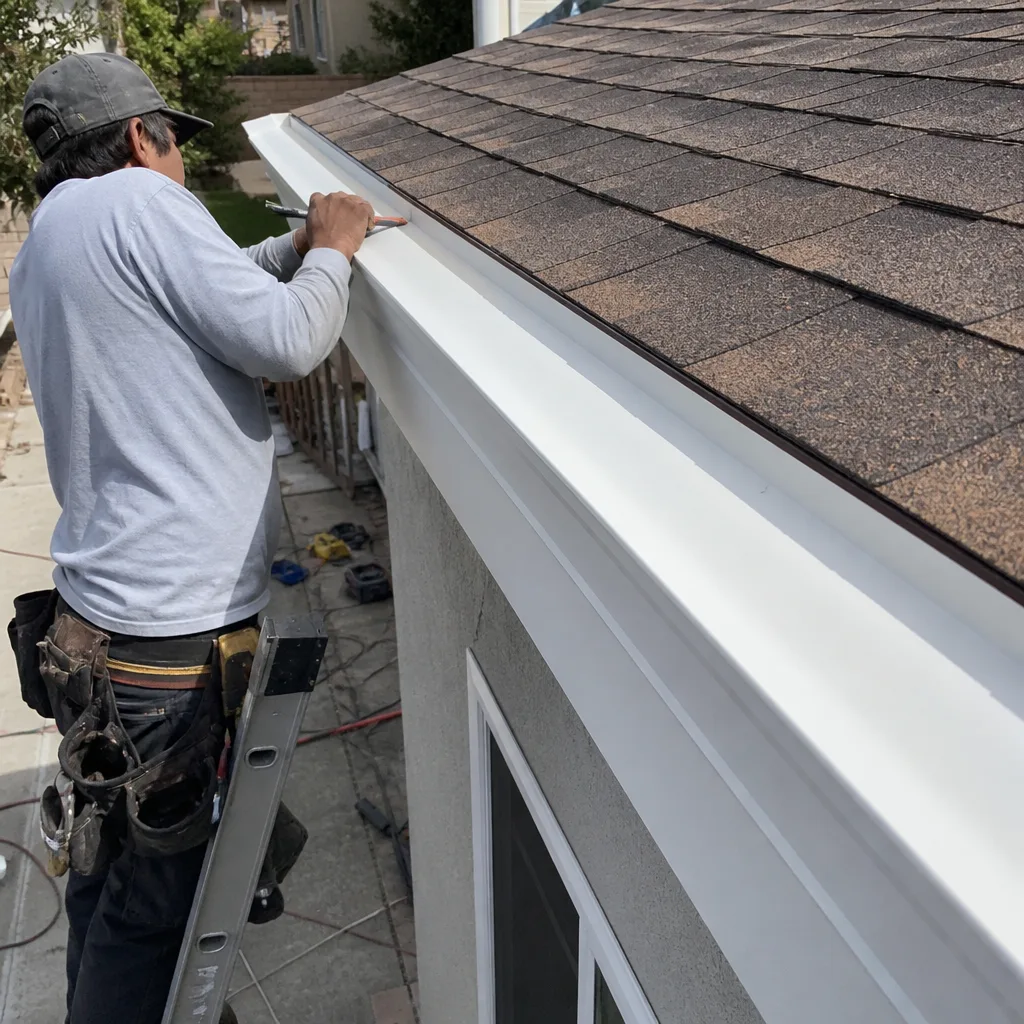
- Edge metal and drip edge fastening. Santa Ana winds find loose edges first. Drip edge should be fastened every 4 to 6 inches, not just at corners.
- Tile attachment method. In higher wind zones, tiles need mechanical attachment with screws or nails, not just gravity or adhesive. Foam-set systems can work but must be specified for the wind load.
We’ve repaired enough wind-damaged roofs in San Diego to know that most failures happen where fasteners were spaced too far apart or where edge metal was inadequately secured. The fix is documentation: ask for the manufacturer’s wind installation guide and confirm your roof meets it.
Neighborhood by Neighborhood: Coastal, Inland, and Hillside Roofing Differences
San Diego covers a lot of ground, literally. The roofing conditions in Ocean Beach have little in common with those in Ramona, and both differ from what a hillside home in Mount Helix needs. Here’s what changes.
Coastal Neighborhoods (Ocean Beach, Point Loma, La Jolla, Encinitas, Carlsbad)
Salt air and marine-layer moisture dominate. Fasteners and flashing corrode faster, underlayment cycles through wet-dry stress daily, and tiles tend to develop biological growth on north-facing slopes. Coastal homeowners should prioritize corrosion-resistant fasteners (stainless or double-galvanized), heavier underlayment, and annual gutter and flashing checks.
Inland Valleys (Mission Valley, Santee, El Cajon, Poway, Escondido)
Heat is the story here. Inland valleys regularly see summer temperatures 10 to 15 degrees higher than the coast, and that heat accelerates asphalt shingle aging. Attic ventilation becomes critical: poor airflow shortens shingle life significantly in these neighborhoods. Lighter-colored materials or reflective coatings on flat roofs reduce heat absorption and cooling costs.
Hillside and Canyon Areas (Mount Helix, La Mesa Hills, Rancho Santa Fe, Alpine, Jamul)
Wind exposure and fire risk shape roofing choices. These areas face stronger Santa Ana gusts and fall within San Diego County’s wildfire hazard zones in many cases. Class A fire-rated materials like concrete tile, metal, or fire-resistant asphalt shingles are often required. Wind-driven embers are the primary threat, so edge details, soffit venting, and flashing gaps need more attention here than anywhere else in the county.
When we quote a roof for a home in one of these San Diego roofing company service areas, we account for the neighborhood’s specific conditions before we ever talk materials. A roof spec that works in Point Loma might be the wrong choice for Ramona.
What a Full Roofing Project Timeline Looks Like in San Diego
If you’ve never reroofed a home, the process can feel opaque. Here’s what actually happens, in order, for a typical asphalt shingle or tile reroof in San Diego.
- Initial inspection and quote (1 to 3 days). A roofer inspects the existing roof, takes measurements, and delivers a written estimate. Reputable contractors in San Diego put the price in writing before any work starts.
- Permit pull (3 to 10 days). San Diego’s Development Services Department requires permits for roof replacements. The exact timeline depends on the jurisdiction: the City of San Diego runs a same-week or two-week turnaround for simple reroofs, while some unincorporated county areas take slightly longer.
- Material delivery (1 to 3 days before start). Materials arrive and are staged on your property. This is when you confirm the shingle or tile color and manufacturer.
- Tear-off and deck inspection (1 to 2 days). The existing roof is removed down to the decking. The contractor inspects the wood for rot or damage. If replacement decking is needed, it’s added at this stage with transparent pricing.
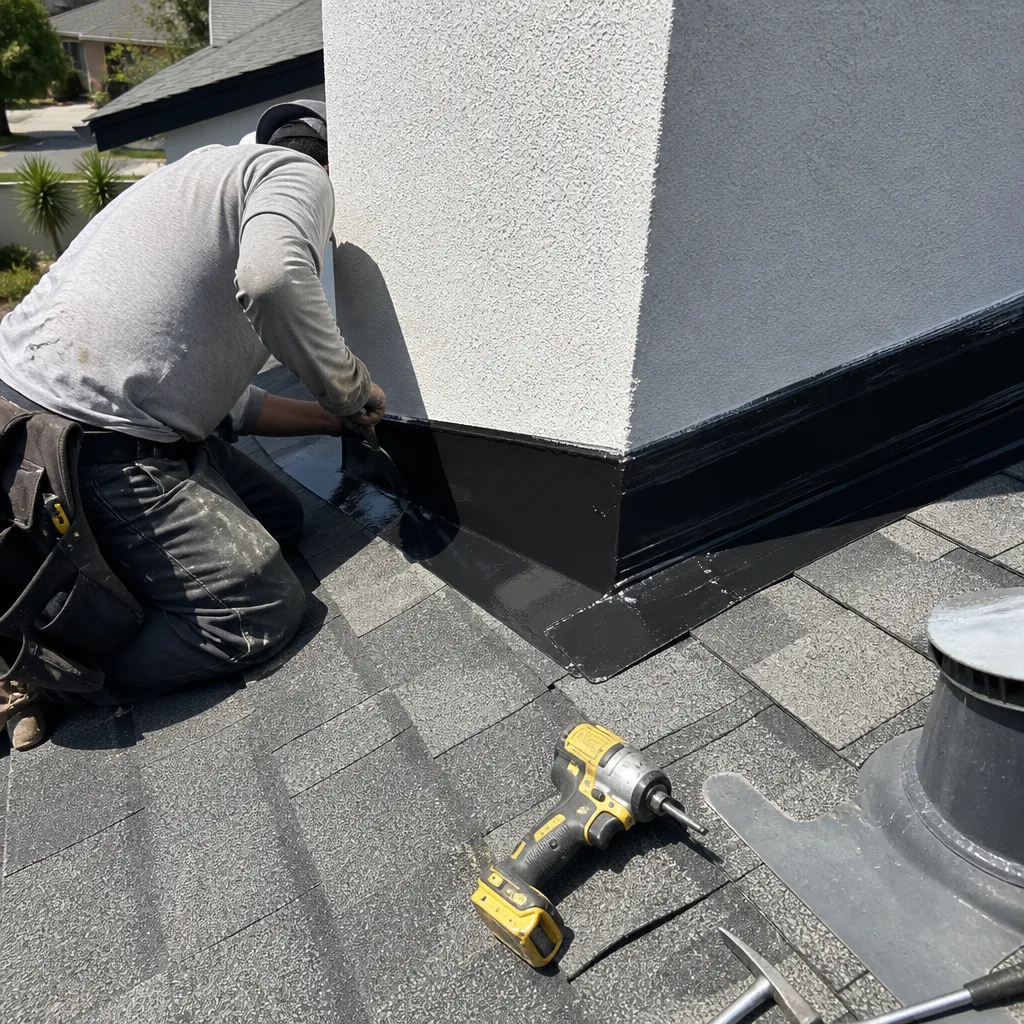
- Underlayment and flashing (1 day). The waterproofing layer goes down, along with new flashing at penetrations, walls, and valleys. This is the most important day of the project.
- Roofing material installation (2 to 5 days). Shingles, tile, or membrane goes on, followed by ridge cap and vent installation.
- Inspection (1 to 2 days after completion). A city or county inspector verifies the work meets code. The contractor handles this scheduling.
- Final cleanup and walkthrough (same day as inspection or next day). Nails get swept, gutters cleared, and you walk the roof with the contractor to confirm everything is done right.
Total time for a typical San Diego reroof: 7 to 14 days from start to final inspection, assuming good weather and no unexpected decking replacement. Tile takes about 20 to 30 percent longer than shingle due to installation complexity.
If you’re considering a roof replacement in San Diego, knowing the steps ahead of time means nothing about the process comes as a surprise.
Real Numbers: What Roofing Costs in San Diego Right Now
San Diego roofing prices run higher than national averages because of California labor rates, permit requirements, and the cost of materials rated for our climate. Here’s what we’re seeing for typical residential projects in San Diego County.
- Asphalt shingle full replacement, 1,500 sq ft roof: $9,000 to $14,000
- Tile full replacement with new underlayment, 1,500 sq ft roof: $18,000 to $33,000 depending on tile type and fastener system
- Flat roof replacement, 1,000 sq ft: $8,000 to $14,000
- Metal standing seam, 1,500 sq ft roof: $21,000 to $30,000
- Asphalt shingle repair (small leak, flashing, or shingle patch): $350 to $900
- Tile repair (cracked tiles, ridge cap, or underlayment spot fix): $450 to $1,800
- Decking replacement (per 4×8 sheet): $75 to $120 per sheet plus labor
These are real ranges for San Diego, not national averages. Your actual price depends on roof slope, accessibility, number of stories, and the condition of what’s underneath. A roofer who quotes without inspecting the deck can’t give you an honest number.
For a specific price on your roof, call us at (619) 393-3877. We put the number in writing before any work starts, every single time. If you need a smaller fix, roof repair in San Diego typically runs lower than a full replacement, and a written estimate helps you compare options honestly.
Common Mistakes to Avoid
- Choosing the cheapest bid without asking why it’s cheap. Low bids in San Diego often mean thinner underlayment, fewer fasteners, or skip-out on permits. Ask for a line-item breakdown and compare what’s actually included.
- Putting new shingles over old ones. Some contractors offer this to cut costs. It hides deck damage, adds weight the structure wasn’t designed for, and voids manufacturer warranties. Always insist on full tear-off.
- Ignoring the underlayment on a tile roof. Homeowners see tile that looks fine and assume the roof is fine. The waterproofing underneath can be failing invisibly. If your tile roof is over 20 years old, have it inspected even if nothing leaks.
- Not confirming the permit is pulled. Unpermitted work creates problems when you sell the home and can leave you without recourse if the job fails. A legitimate San Diego roofer pulls permits and passes inspections.
- Waiting until a leak appears before calling anyone. By the time water shows up on your ceiling, damage has already spread through the decking and possibly into insulation. Annual inspections catch issues before they become inside-the-house problems.
- Trusting a guarantee that’s only verbal. If the roofer won’t put the warranty in writing before the crew leaves, you don’t have a warranty. Written guarantees are standard practice among reputable San Diego roofers.
When to Call a Professional
Some roofing issues are visible from the ground and demand immediate attention: shingles that have slid out of position after a Santa Ana wind event, tiles cracked by falling branches, or water stains on a ceiling after rain. You should also call a roofer if you’re buying or selling a home and need an honest condition report, or if your roof has passed the 15-year mark without a professional inspection. Climbing onto a roof yourself is dangerous work, and the most expensive mistakes happen when well-intentioned DIYers walk on tile roofs and crack tiles they didn’t know were fragile-see DIY vs Professional Roofing: The San Diego Homeowner’s Decision Guide for why. Tilehurst Roofing San Diego offers free estimates throughout the San Diego area, call (619) 393-3877 to schedule an inspection and get a written price.
Frequently Asked Questions
A full roof replacement in San Diego costs between $9,000 and $22,000 for most homes, depending on material choice, roof size, and the condition of the existing decking. Asphalt shingles run $6 to $9 per square foot installed, concrete or clay tile $12 to $22, and metal $14 to $20. Call (619) 393-3877 for an exact quote on your specific roof, estimates are free and the price you receive is in writing before any work starts.
Yes, San Diego requires a building permit for roof replacements and most structural reroof projects. Reputable contractors pull the permit, schedule the inspection, and handle the paperwork for you. Small repairs like replacing a few shingles typically don’t require a permit, but anything involving decking or underlayment replacement does.
With Tilehurst Roofing, no. We put the written price in your hands before any work begins, and we don’t add change orders unless you ask for something outside the original scope, like replacing rotted decking that was hidden and couldn’t be seen during the estimate. When that happens, you approve the additional cost in writing before we proceed.
A properly installed tile roof in San Diego lasts 40 to 60 years for the tile itself, but the underlayment beneath it typically needs replacement every 25 to 30 years. If your tile roof is approaching age 20, the smart move is a professional inspection to check the underlayment condition rather than waiting for a leak.
Yes. The daily moisture from San Diego’s coastal fog creates expansion and contraction cycles that slowly crack underlayment, loosen fasteners, and compromise flashing, especially within a few miles of the coast. This happens even during dry years with no rain, which is why inspections matter regardless of recent weather.
The best material depends on your neighborhood, budget, and how long you plan to stay. Tile offers the longest lifespan and works well from La Jolla to El Cajon. Asphalt shingles from manufacturers like Owens Corning or IKO cost less upfront and perform well when installed with proper underlayment and adequate ventilation. Metal excels on hillside properties where fire resistance matters. A consultation that accounts for your specific San Diego neighborhood will give you the right answer.
The Bottom Line
Roofs in San Diego don’t fail from rain alone. They fail from UV exposure, marine-layer moisture cycles, Santa Ana winds, and installation details that were never built for this climate. Knowing what questions to ask, what materials make sense in your neighborhood, and what real pricing looks like puts you in control of the biggest investment you’ll make on the outside of your home. The most important step you can take is a professional inspection with a written estimate that covers the full scope of work. If your roof is over 15 years old, call (619) 393-3877 for a free estimate and a written price before any work begins.
Written by Greg Holloway, Owner at Tilehurst Roofing San Diego, serving San Diego since 2000.
See the difference
 Before
 After
After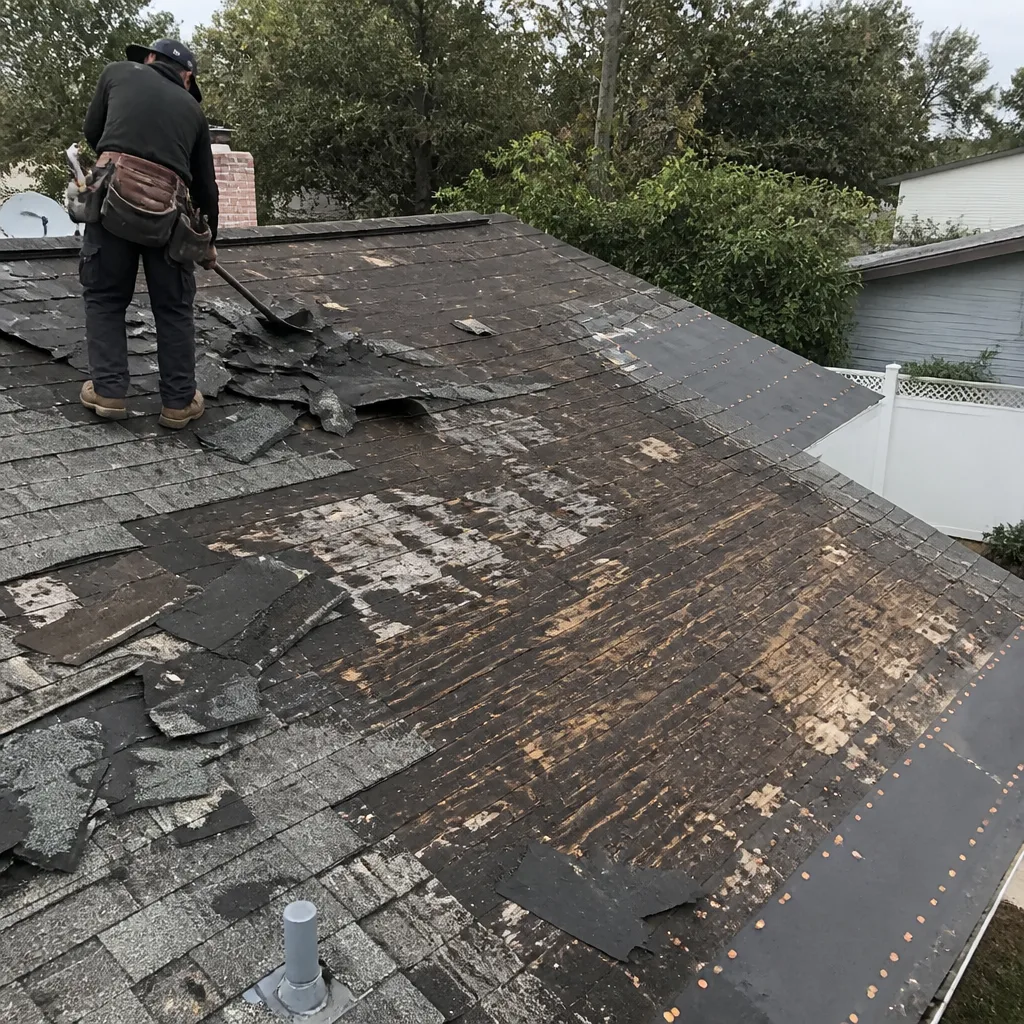 Before
 After
After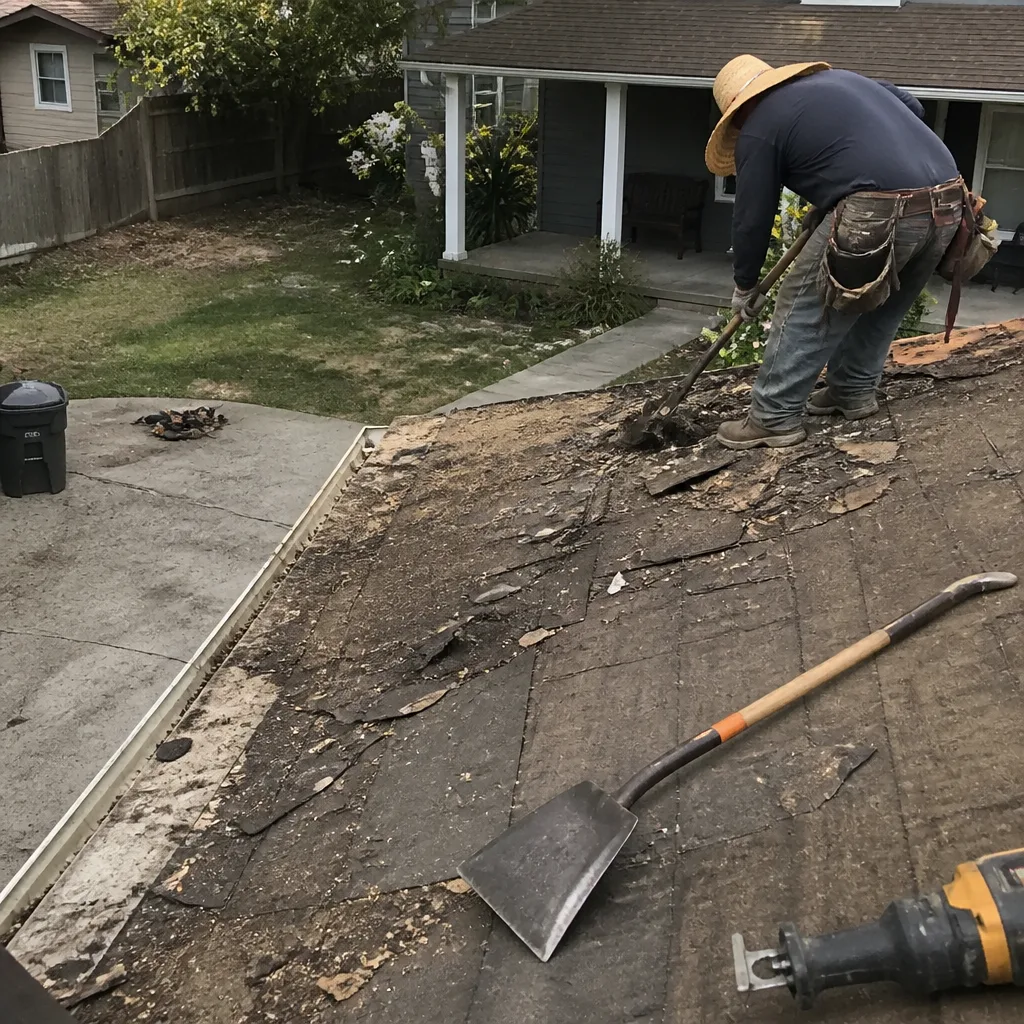 Before
 After
After