
Last updated October 17, 2026
 Metal roofing
 Architectural shingles
 Tile roofing
 GAF
GAF Owens Corning
 Flat & low-slope
Free roof inspection with deck photos before we talk money - GAF and Owens Corning certified installation
Roofing Company Maintenance Checklist for San Diego Homeowners
Most roofing maintenance advice you’ll find online was written by someone who has never stood on a San Diego roof in August. Our climate is unlike anywhere else in the country: intense UV that bakes materials year-round, a marine layer that keeps coastal neighborhoods damp until noon, Santa Ana winds that hit 60 mph in the fall, and a rainy season so brief that homeowners forget their roof ever leaks. That combination creates a specific set of problems that generic checklists miss entirely. This guide is different. It’s written from ground level, for homeowners, with plain-English explanations of what to look for, which tasks you can safely do yourself, and which ones should send you to our Roofing Company services. We’re going to walk through exactly what a legitimate maintenance visit should include, what it should cost, and how to document everything so your warranty stays intact and your home’s resale value holds up.
Quick Answer
A San Diego roof maintenance checklist should include a ground-level visual inspection twice a year (spring and fall), gutter and downspout clearing before the November rains, tile and flashing checks after Santa Ana wind events, and a professional roof inspection every 18 to 24 months. Most asphalt-shingle repairs in San Diego run $350 to $900, while tile repairs typically cost $500 to $1,200 depending on access and the number of tiles displaced-see our Roofing Cost Breakdown: The San Diego Homeowner’s Reference for 2026 for fuller pricing context. The five San Diego-specific issues homeowners need to watch for are algae from the marine layer, tile slippage from thermal cycling, flashing corrosion from coastal salt air, debris from eucalyptus trees, and crumbling foam-set mortar on tile hips and ridges.
Styles & brands we work with
Table of Contents
- The Ground-Level Inspection: A Homeowner’s Binocular Routine
- Five San Diego-Specific Maintenance Tasks Most Checklists Miss
- What a Legitimate Professional Maintenance Visit Should Include
- Red Flags: When a Contractor Is Walking Your Roof and Charging You for Nothing
- The San Diego Annual Maintenance Calendar
- Documenting Your Maintenance History: Warranty Protection and Resale Value
- DIY vs. Professional: Where the Line Actually Is
- Common Mistakes to Avoid
- When to Call a Professional
- Frequently Asked Questions
The Ground-Level Inspection: A Homeowner’s Binocular Routine
You do not need to climb on your roof to catch most problems early. In fact, we’d rather you didn’t. Most roofing injuries happen to homeowners who went up for a “quick look” and found a loose tile the hard way. A pair of binoculars, a sunny morning, and fifteen minutes in your yard will catch 80% of developing issues before they become leaks. Here’s what to look for, starting at the ridgeline and working down.
What to Look For on Any Roof Type
- Ridgeline and hips: Check that ridge caps sit straight and tight. On tile roofs, look for gaps in the mortar and any cap that appears shifted. A crooked ridge cap is your earliest warning that wind or thermal movement is working on the fasteners.
- Field of the roof: Look for tiles that are cracked, chipped, or sitting at a slightly different angle than their neighbors. On shingle roofs, scan for curled edges, missing granules (you’ll see dark patches where the fiberglass mat shows through), or shingles that have lifted at the corners.
- Flashings: These are the metal pieces where roof planes meet walls, chimneys, skylights, and vents. Look for rust, lifted edges, or gaps where the flashing meets the roof surface. In coastal San Diego neighborhoods like Ocean Beach, Point Loma, and La Jolla, salt air corrodes flashing faster than it does inland.
- Valleys: Where two roof planes meet, debris accumulates. Look for leaves, eucalyptus bark, or visible water staining in the valley.
- Eaves and fascia: Check for water staining on the underside of the eave, peeling paint on the fascia board, or any sagging. These are signs water is getting where it shouldn’t.
- Gutters: Look for granules from asphalt shingles collecting in the gutter. A small amount after installation is normal; a steady accumulation means the shingles are degrading. Also check that gutters are pitched correctly and water flows toward downspouts.
What to Look For Specifically on Tile Roofs
San Diego’s older neighborhoods, from Mission Hills to Kensington to Coronado, are full of concrete and clay tile roofs. Tile lasts a long time, but the underlayment beneath it does not. Most homeowners don’t realize that the tiles are just the shield; the waterproof layer is the underlayment underneath. Here’s what to watch for:
- Slipped tiles: Thermal cycling, which is the daily expansion and contraction from San Diego’s warm days and cool nights, slowly works tiles loose over decades. A tile that has slipped even two inches exposes the underlayment to direct sun, and UV destroys underlayment fast.
- Broken tiles at the edges: The first tiles to fail are usually at the eaves and gable ends where they’re most exposed to wind and impact from falling branches.
- Foam-set mortar: Many San Diego tile roofs are held together with foam adhesives rather than traditional mortar. Foam degrades under UV and loses its grip. If you see tiles that rattle in the wind or sit proud of their neighbors, the foam has likely failed.
What to Look For Specifically on Flat Roofs
Flat roofs are common on mid-century homes across Clairemont, Allied Gardens, and much of Mission Bay-adjacent development. They present different problems:
- Ponding water: Any water that sits for more than 48 hours after rain is a problem. Flat roofs should drain within a day. Ponding accelerates membrane breakdown and creates algae growth.
- Blistering and cracking: Look for bubbles in the roof surface (blisters) or visible cracks in the membrane, especially around penetrations like pipes, vents, and AC units.
- Lifted flashing at parapet walls: On homes with parapet walls, check where the roof meets the wall. This seam fails first because it takes the most thermal stress.
Five San Diego-Specific Maintenance Tasks Most Checklists Miss
Here is where we separate what actually matters in San Diego from what generic advice gets wrong. If you’ve read a checklist that mentioned ice dams and snow load, it was written for Minnesota. These five items are the ones we see causing real damage in San Diego, year after year.
- Algae from the marine layer. If you live west of Interstate 5 in neighborhoods like Pacific Beach, Ocean Beach, or Solana Beach, your roof stays damp for hours every morning from June through September. Algae loves that moisture, and it grows fast on north-facing slopes where the sun doesn’t burn it off. Algae itself doesn’t destroy a roof overnight, but it holds moisture against the surface, accelerates granule loss on shingles, and creates ugly black streaks. A professional soft wash with a roof-safe algaecide every 24 months prevents this. Never pressure wash a shingle roof; it strips granules and voids most manufacturer warranties.
- Tile slippage from thermal cycling. San Diego’s inland valleys can swing 40 degrees between 5 a.m. and 2 p.m. That means roof materials expand and contract daily, and over 20 years, the fasteners and adhesives holding tile in place simply fatigue. We’ve seen entire sections of tile roof in El Cajon and Santee that are essentially just resting on each other with no working attachment. A tile slippage check after each Santa Ana season should be non-negotiable.
- Flashing corrosion from coastal salt air. If you’re within two miles of the ocean, your metal flashings are corroding faster than the same flashing would inland. Galvanized steel lasts roughly 15 years in coastal salt air before it needs replacement. We see this constantly in La Jolla, Carlsbad, and Del Mar, where homeowners have beautiful tile roofs that will last 50 years but flashings that fail in 12. When you’re inspecting, pay extra attention to the flashing around chimneys and skylights, and note any rust bloom or pitting.
- Debris from eucalyptus trees. San Diego’s hillsides are full of blue gum eucalyptus, and their bark, leaves, and branches are relentless. Eucalyptus debris is acidic, and when it accumulates in valleys and behind chimneys, it holds moisture and breaks down roofing materials faster than neutral debris would. In neighborhoods like Rancho Santa Fe, Fairbanks Ranch, and Scripps Ranch, we recommend clearing roof valleys and gutter guards every three months, not twice a year. The best approach is a blower from the ground or a soft-bristle broom if you must go up.
- Foam-set mortar checks on tile hips and ridges. Many tile roofs installed in San Diego between 1985 and 2010 used foam adhesives instead of traditional mortar to set ridge caps and hip tiles. The foam was fast to install and looked fine on day one, but it breaks down under UV exposure. By the 15-year mark, we regularly find ridge caps that can be lifted off by hand. If your home was built or roofed during that window, have a professional check the ridge integrity specifically, even if the tiles themselves look fine.
What a Legitimate Professional Maintenance Visit Should Include
Not every maintenance visit is the same. A real one is specific, documented, and leaves you with information you didn’t have before. Here is what you should get when you pay for professional roof maintenance in San Diego.
The Inspection
A thorough inspection takes 45 to 90 minutes and covers everything from the attic to the gutter outlets. Inside, the inspector should check the attic for water stains on the underside of the decking, signs of condensation, and proper ventilation. On the roof, they should walk every plane, check every flashing point, test tile and shingle adhesion, clear debris from valleys and scuppers, and check all penetrations: pipes, vents, skylights, and HVAC mounts. They should photograph everything, particularly anything that needs attention. After the visit, you should receive a written report with photos and a clear list of what needs work now, what can wait six months, and what’s worth watching.
The Maintenance Tasks
A legitimate maintenance visit includes these items as standard, not as add-ons:
- Debris clearing from valleys, behind chimneys, and around all penetrations
- Gutter and downspout clearing, plus a water-flow test
- Re-sealing any minor flashing gaps with appropriate sealant
- Re-setting loose tiles or shingles that haven’t cracked
- Tightening any loose fasteners or pipe boots
- Checking and clearing roof drains and scuppers on flat roofs
- Documenting the condition of the roof with dated photos
What It Should Cost
In the San Diego market, a professional roof maintenance visit typically runs $250 to $500 depending on roof size, slope, and accessibility. If the maintenance visit includes minor repairs like replacing a few tiles or resealing a flashing, expect $350 to $800 total. Anything priced under $150 is almost certainly a door-knocker who will find $3,000 worth of “emergency” problems the moment they’re on the roof.
Red Flags: When a Contractor Is Walking Your Roof and Charging You for Nothing
The maintenance industry has a credibility problem, and we’re honest about it. Some companies use “free roof inspections” as a sales appointment in disguise, and some maintenance visits are 20 minutes of walking around followed by a vague verbal summary and a bill. Here is how to tell the difference between a real maintenance visit and theater.
- No photos, no report. If the company doesn’t provide dated photographs and a written summary of what they found, they didn’t document anything, and you have no record of what was done. Ask before you book whether a written report with photos is standard.
- The price is discovered on the roof. A contractor who climbs up, then comes down with a tablet showing you “severity level” photos and a financing application is selling, not maintaining. A legitimate maintenance visit separates finding problems from pricing fixes. You should get a written maintenance report first, then a separate written repair estimate for anything that needs attention.
- They “found” broken tiles that were already broken. A good contractor photographs the roof condition before starting any maintenance work. If the after-visit photos show new damage, that’s on them. If you don’t have before photos, you can’t verify anything.
- No moisture meter, no attic visit. A real inspection checks the attic and uses a moisture meter on suspicious decking. If the contractor never enters the house and never opens the attic hatch, they’re only checking half the roof system.
- Pressure-washing included. Any contractor offering to pressure wash shingles as part of maintenance is either poorly trained or doesn’t care about your warranty. Pressure washing strips granules, which is where shingles get their UV protection. Granule loss is irreversible and shortens the roof life by years.
This is also where the Kingswell values come in. Tilehurst Roofing San Diego operates on the principle that a maintenance visit is an act of documentation, not a sales call, as we explain in our Roofing Permits, Codes & Inspections in CA: What You Need to Know. We give you the written price before any work starts, and we put the maintenance findings and any repair guarantee in writing before the crew leaves.
The San Diego Annual Maintenance Calendar
San Diego’s climate doesn’t follow the same rhythm as the rest of the country. Here’s how to structure your roof maintenance year around our unique weather patterns, including Santa Ana season and the short winter rainy window.
January – February (Post-Rain Assessment)
The brief San Diego rainy season typically runs from November to March, with most rain falling between December and February. Once the rain stops, do a ground-level inspection looking for water staining on eaves, fascia, and interior ceilings. Check the attic on a dry day for any signs of moisture. If you see water marks, don’t wait. Schedule a professional assessment. Water intrusion compounds quickly.
March – April (Spring Clear-Out)
After the rains stop and before the marine layer settles in, clear all debris from valleys, gutters, and scuppers. This is the best time of year for a professional maintenance visit if the roof is aging or if you saw anything concerning during winter. Temperatures are mild, and any repairs made now will have months to settle before the next rain.
May – August (Marine Layer Watch)
Coastal homeowners should watch for algae growth during these months, especially on north-facing slopes. If you see black streaking appearing, schedule a soft wash with a roof-safe algaecide. Inland, this is when the UV is most brutal, and it’s the best time to check shingles for curling and granule loss.
September – October (Pre-Santa Ana Preparation)
Santa Ana winds typically begin in September and peak in October and November. Before the winds arrive, clear all roof debris, check that tiles and caps are secure, and trim any tree branches hanging over the roof. Eucalyptus branches are heavy, and a 60 mph gust will throw them right through a tile. After the first major Santa Ana event, do another ground inspection looking for displaced tiles, lifted flashing, and any debris the winds deposited in valleys.
November – December (Rain-Ready Check)
Before the rains start in earnest, make sure gutters and downspouts are clear and flowing. Check that all flashing seals are intact. If you haven’t had a professional inspection in 18 to 24 months, schedule one now before the rains begin. Once water starts flowing, small problems become urgent ones.
Documenting Your Maintenance History: Warranty Protection and Resale Value
Most San Diego homeowners lose their manufacturer warranty not because the product failed but because they couldn’t prove they maintained it. GAF, CertainTeed, and Owens Corning all include maintenance requirements in their warranty language, and the burden of proof falls on the homeowner. Without documentation, you have no proof. Here’s how to build a maintenance file that protects your warranty and impresses a future buyer.
What to Document
- Every professional inspection and maintenance visit. Keep the written report, the photos, and the invoice in a single folder, physical or digital. The report should include the date, the roof condition, the specific work performed, and the contractor’s contact information.
- Every repair. Keep the written estimate, the final invoice, and the written guarantee for every repair. If the repair fails inside the guarantee period, you have the paperwork to hold the contractor accountable. Tilehurst provides a written guarantee on every repair before the crew leaves, not mailed later.
- Every DIY maintenance action. If you clear debris, note the date and take a photo. If you notice algae growth and treat it, document it. If you check the attic after a rain, write down the date and what you saw. A simple notebook entry with a photo is enough.
- Manufacturer documentation. Keep the original warranty certificate, the installation date, the product name, and the contractor’s license information. If you don’t know what was installed on your roof, a professional inspection can usually identify the material and approximate age.
How This Helps at Resale
When you sell your home in San Diego, the buyer’s inspector will look at the roof. If you have a documented maintenance history showing regular inspections, clear gutter maintenance, and timely repairs, the buyer has one less reason to negotiate the price down or demand a roof credit. More importantly, it demonstrates that the home was cared for. We’ve seen full maintenance files move deals forward faster in neighborhoods like North Park and South Park, where older homes with character often need more buyer reassurance. If you’re considering a roofing company in San Diego for your maintenance, ask upfront whether documentation and written reports are included as standard.
DIY vs. Professional: Where the Line Actually Is
There’s a difference between being a responsible homeowner and taking unnecessary risks. Here’s how we draw the line, based on what we’ve seen go well and what we’ve seen go wrong.
Safe to Do Yourself
- Ground-level visual inspections with binoculars
- Clearing debris from gutters while standing on a ladder (with a spotter and a stable, level base)
- Trimming tree branches back from the roofline
- Checking the attic for water stains with a flashlight
- Documenting everything in a maintenance log
- Applying a zinc or copper strip near the ridge to discourage algae (this is a safe DIY upgrade, not climbing work)
Leave to a Professional
- Walking on any roof with a pitch steeper than 4:12
- Walking on tile roofs at all. Tile is brittle, and your weight can crack tiles that were perfectly fine before you stepped on them
- Any work involving a ladder above the first story
- Re-setting or replacing tiles, shingles, or flashing
- Any sealant work on penetrations
- Flat roof membrane repairs of any kind
- Anything involving roof-mounted equipment, vents, or skylights
Roof work is genuinely dangerous. Falls from roofs are a leading cause of construction fatalities, and the homeowners we’ve seen hurt were usually doing something that felt simple: one more step, one more reach. If you’re unsure whether a task is safe, call a professional. The cost of a roof repair in San Diego is always less than the cost of a hospital bill or a permanent injury. And when the repair requires a specialist, a roof replacement in San Diego is a decision that deserves a written price and a real warranty, not a handshake.
Common Mistakes to Avoid
- Skipping the attic check. The attic tells you things the roof surface can’t. Water often travels along rafters before it shows on a ceiling, and you can catch leaks months early by checking the attic after every significant rain.
- Pressure washing shingles. We’ve said it once and we’ll say it again because we see it constantly: pressure washing trashes asphalt shingles. It blasts off granules, exposes the fiberglass mat, and voids the manufacturer warranty. Tile roofs can tolerate gentle washing, shingle roofs cannot.
- Ignoring roof valleys. Valleys are where water concentrates, and they’re where debris piles up. A clean valley drains fast; a clogged valley backs water up under shingles and tiles. Clear valleys quarterly if you have trees near the roof.
- Waiting for a visible leak before acting. By the time water reaches a ceiling, it has already passed through the roofing material, saturated the decking, and potentially damaged insulation. A $400 flashing repair caught early prevents a $4,000 deck and drywall repair later.
- Assuming tile means waterproof. Tile is a shield, not a seal. The underlayment underneath is what keeps water out, and underlayment fails over time. Many San Diego homeowners see a beautiful tile roof and assume it’s fine, when the underlayment underneath is 25 years old and failing silently.
- Using silicone sealant on flashings. Not all sealants work on roofing materials. The wrong product can degrade the flashing or fail within months. Professionals use roofing-specific sealants matched to the material; the wrong tube from the hardware store creates a false sense of security.
- Trusting a door-knocker “inspection.” After a Santa Ana event, out-of-town storm chasers and door-to-door sales companies descend on San Diego neighborhoods. Any unsolicited “free inspection” that immediately produces an emergency repair estimate is a sales script, not a diagnosis. Get a second opinion from a local company before authorizing any work.
When to Call a Professional
Some situations aren’t maintenance tasks at all; they’re repair or replacement decisions that need a professional assessment immediately. Call a roofer if you see water staining on any interior ceiling or wall, if you find wet insulation in the attic, if tiles or shingles have come off and exposed the underlayment, if a Santa Ana event left visible roof damage, or if your roof is more than 20 years old and you’ve never had a professional inspection. Also call if you’re buying or selling a home and the roof condition is going to affect the deal. Tilehurst Roofing San Diego offers free estimates in San Diego. Call (619) 393-3877 to schedule an assessment. We’ll give you a written price before any work starts, and if you’re not ready to act, you’ll still walk away with a documented condition report and photos, because that’s what maintenance is for.
Frequently Asked Questions
Every 18 to 24 months is the right rhythm for most San Diego homes, with two additional ground-level self-inspections per year in spring and fall. If your roof is older than 15 years or sits directly under eucalyptus trees, shorten the professional interval to every 12 months.
A professional roof maintenance visit in San Diego typically runs $250 to $500 for a standard-size home, with most homeowners paying around $350. If the visit includes minor repairs like re-setting tiles or resealing flashings, expect $350 to $800 total. Tilehurst provides a written price before any work begins, so you’ll never be surprised at the door.
Yes, though you can do it less often. Even without trees, San Diego’s wind carries dust, bird activity leaves debris, and shingle roofs shed granules that accumulate in gutters. A gutter that hasn’t been cleared in two years will have some level of blockage, and blocked gutters back water up under the roof edge. Aim for twice a year regardless, and fresh water flow through the downspout is your confirmation that the system is clear.
No, not unless you’re trained to do it and you accept the risk of cracking tiles. Concrete and clay tile are brittle, and a person’s weight concentrated on the wrong spot can crack tiles that were perfectly sound. Even professional roofers walk tile roofs carefully, on the lower third of each tile, and only when necessary. Ground-level binocular inspection catches most visible problems safely.
The marine layer keeps coastal San Diego neighborhoods damp for hours each morning, which encourages algae growth on shaded roof slopes and accelerates corrosion on metal flashings. Homes within two miles of the ocean should expect flashings to degrade faster than inland homes, and north-facing shingle slopes may need algae treatment every 24 months. It’s a slow, persistent wear pattern rather than a sudden failure.
Most manufacturer warranties from GAF, CertainTeed, and Owens Corning require that you maintain the roof and keep records of that maintenance. A written report with dated photos, invoices showing the work performed, and a log of your own DIY maintenance is enough documentation in almost all cases. If you don’t know what’s on your roof, have a professional identify the material and age, then start your maintenance file from that baseline. Call (619) 393-3877 for a documented inspection if you’re starting from zero.
The Bottom Line
San Diego roofs fail slowly, visibly, and predictably. The signs are there months or years before a leak appears: slipped tiles after a Santa Ana, black streaking from the marine layer, corroding flashing in salt air, granules piling up in gutters. Most homeowners just don’t know what to look for or when to look. This checklist gives you a ground-level routine you can do safely, a calendar tied to San Diego’s actual weather patterns, and a standard for what a legitimate professional maintenance visit should deliver in writing. For more guides & resources, explore our blog. A $350 maintenance visit today is cheaper than a $12,000 deck replacement in five years, and that math works in every neighborhood from Chula Vista to Oceanside.
Written by Greg Holloway, Owner at Tilehurst Roofing San Diego, serving San Diego since 2000.
See the difference
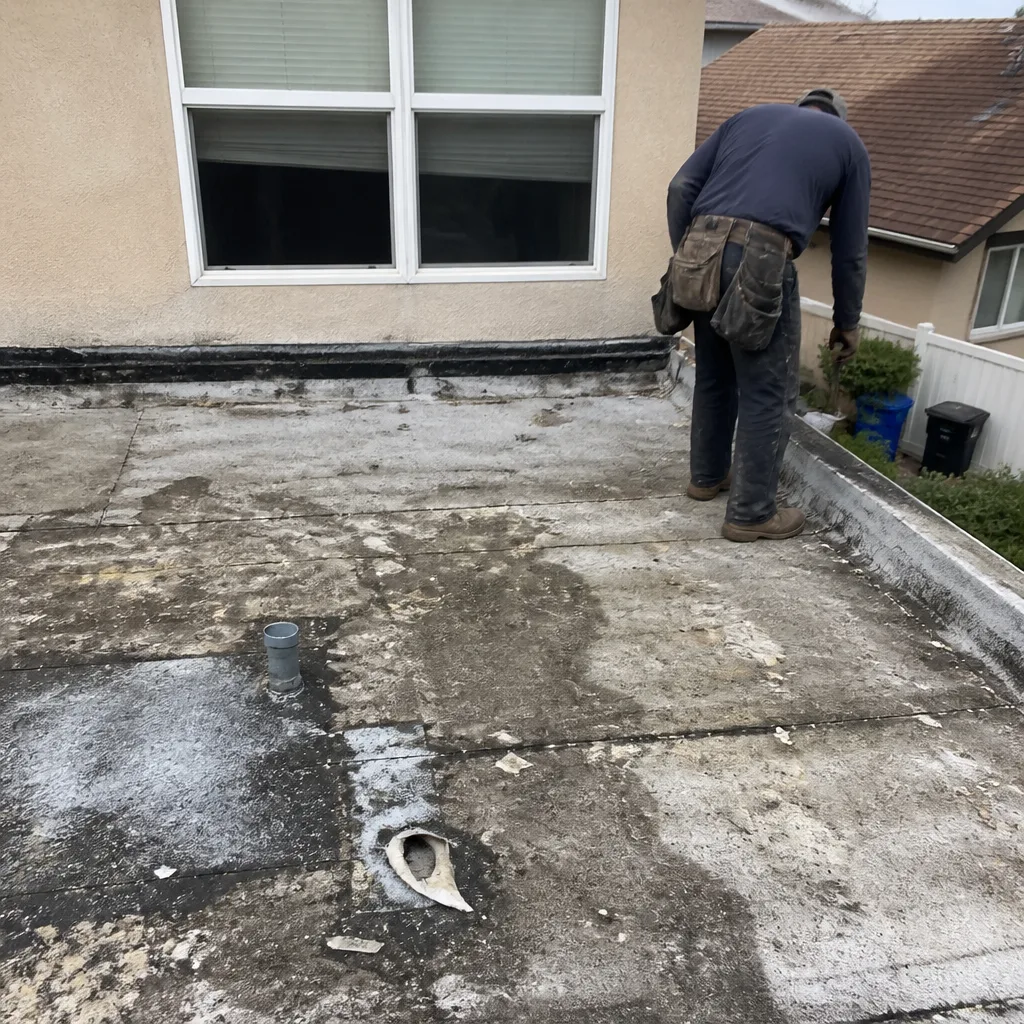 Before
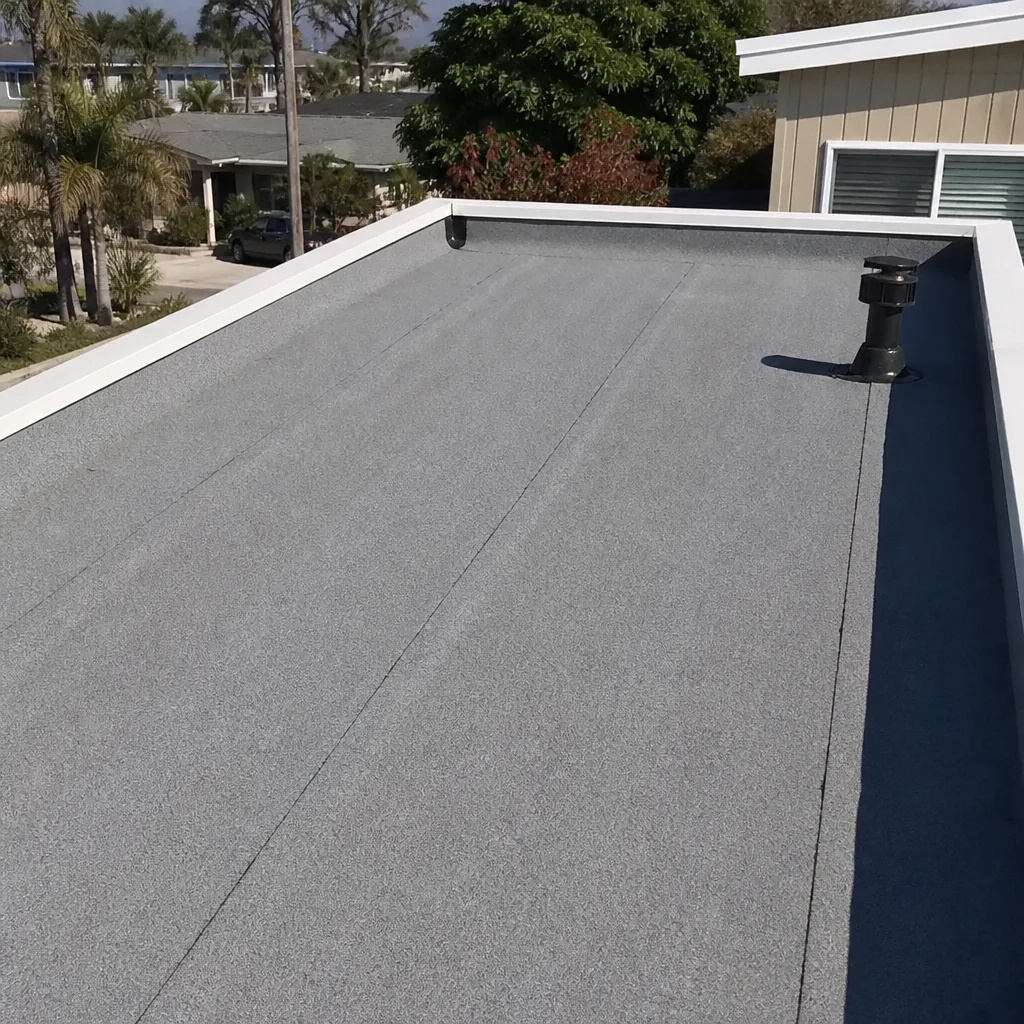 After
After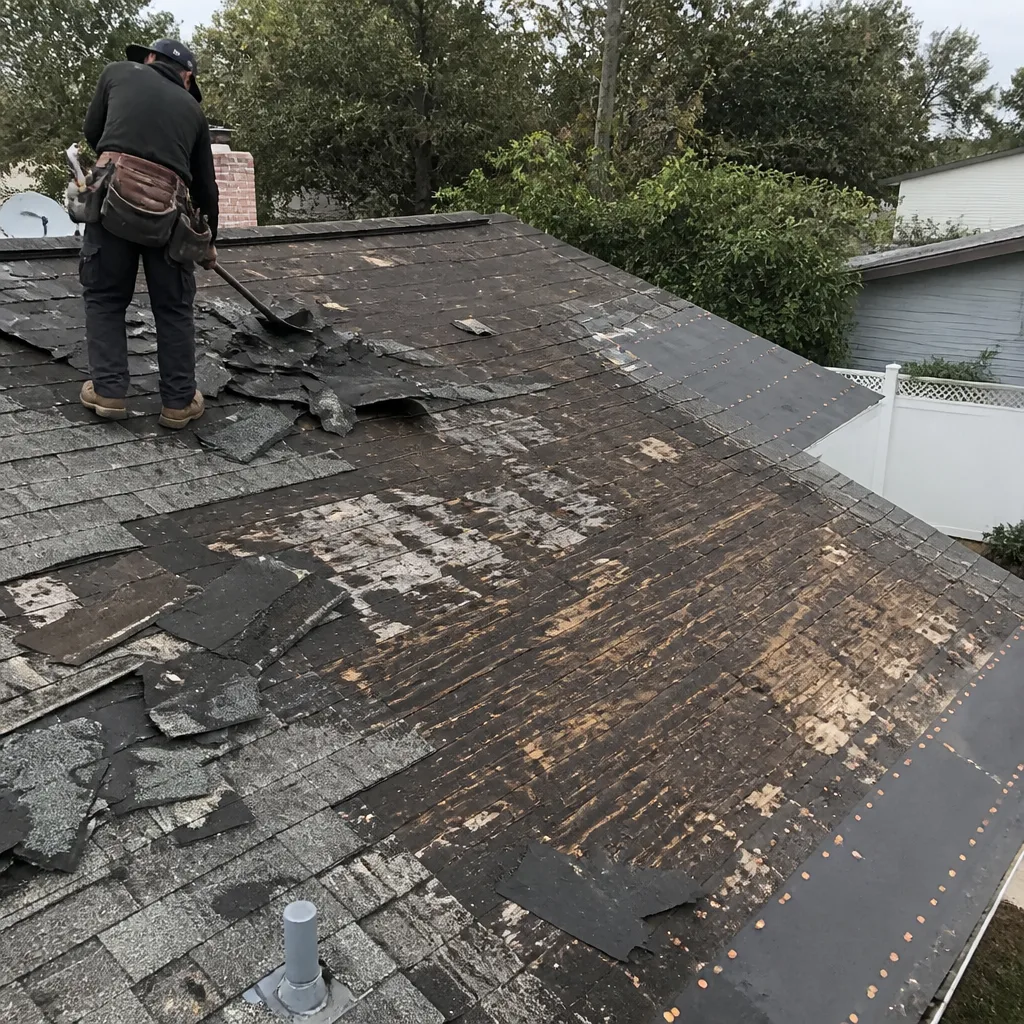 Before
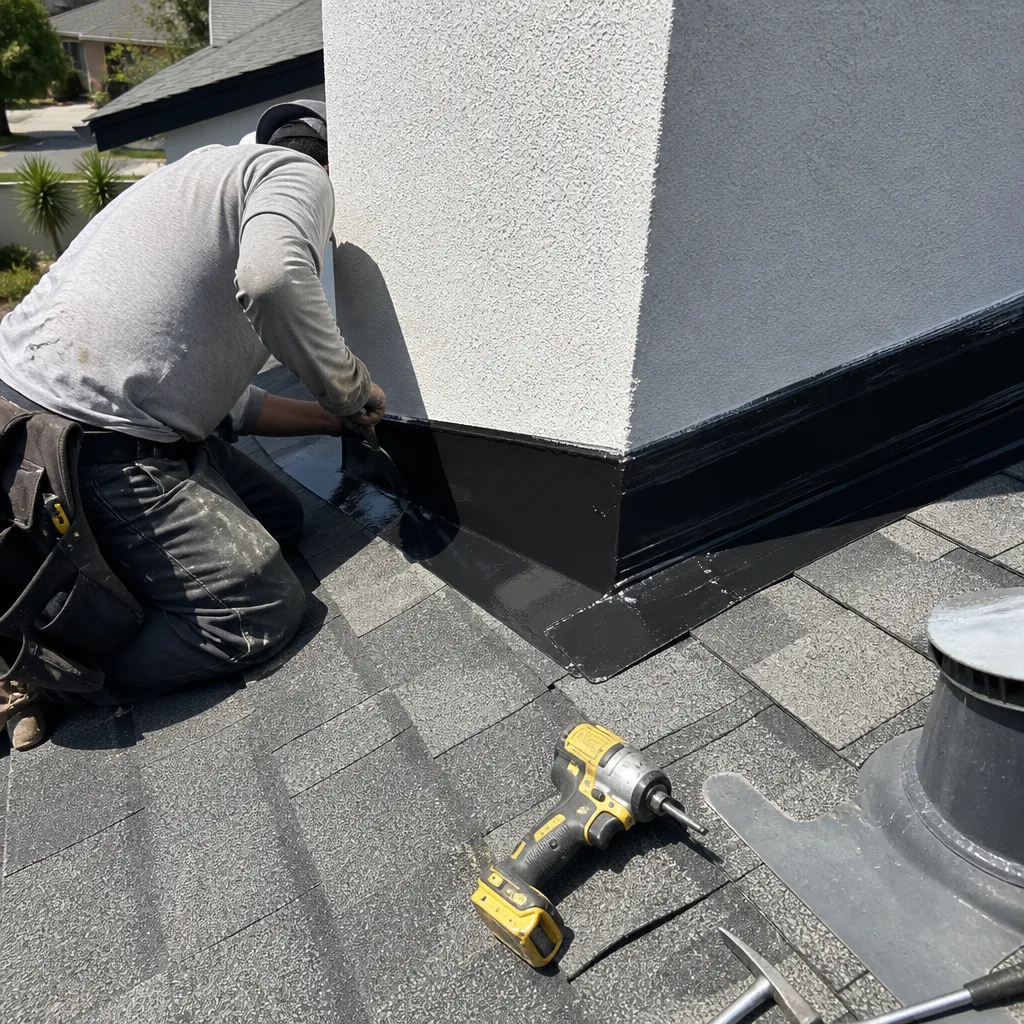 After
After Before
 After
After