
Last updated October 17, 2026
 Metal roofing
 Architectural shingles
 Tile roofing
 GAF
GAF Owens Corning
 Flat & low-slope
Free roof inspection with deck photos before we talk money - GAF and Owens Corning certified installation
Roofing Warning Signs: A San Diego Homeowner’s Reference Guide
The tile on your San Diego roof can look perfectly intact from the street while the foam mortar beneath it has been crumbling for two years, which means the warning sign isn’t on the tile at all. It’s in a slight crunch sound when you stand near the eave. That gap between what a roof looks like and what it’s actually doing is the core problem this guide solves. Most roofing warning sign checklists are built around dramatic failure: collapsed sections, waterfalls through ceilings, shingles in the driveway after a Santa Ana. But in San Diego’s climate, the failures that cost homeowners the most money build slowly, quietly, and almost invisibly. By the time they look like something, the repair bill has already multiplied. What follows is a reference guide built around early detection, not crisis recognition, written for homeowners who want to catch problems when they’re still measured in hundreds of dollars instead of tens of thousands.
Styles & brands we work with
Quick Answer
The most common roofing warning signs in San Diego are granule buildup in downspouts during dry months, efflorescence (white mineral staining) on stucco below the roofline, hairline ceiling stains that appear after marine-layer nights, and a crunching sound underfoot near roof eaves where tile is mounted over deteriorating foam mortar. If you notice any of these, document them with photos and call a qualified San Diego roofing contractor for an inspection. Most early-stage repairs run between $350 and $900, while the same issue left for another year or two frequently becomes a $4,000 to $12,000 problem.
Table of Contents
- Why San Diego Roofs Fail Differently
- Exterior Warning Signs You Can See From the Ground
- Interior Warning Signs Most Homeowners Misattribute
- Tile Roof Warning Signs: Cosmetic vs. Structural
- Flat Roof Warning Signs After San Diego Heat
- The San Diego Warning Sign Decision Tree
- What San Diego Roof Repairs Actually Cost
- Common Mistakes to Avoid
- When to Call a Professional
- Frequently Asked Questions
- The Bottom Line
Why San Diego Roofs Fail Differently
San Diego’s climate is not kind to roofs in the way most people expect. We don’t get Northeast ice dams, Midwest hail, or Florida hurricane-driven rain. Instead, we get a slow, persistent combination that works on roofing materials year-round: intense UV exposure for roughly 260 days a year, salt air within a few miles of the coast, and the marine layer’s nightly moisture cycle. The morning fog condenses on roof surfaces, then burns off as the sun rises, leaving behind mineral deposits that accumulate in microscopic cracks. Repeat that cycle three hundred times a year and you get deterioration patterns that generic roofing guides from other parts of the country never mention.
The result is that San Diego roofs rarely fail all at once. They erode. The underlayment beneath tile or shingles dries out and becomes brittle. Flashing at chimney and skylight penetrations expands and contracts with daily temperature swings that can hit forty degrees between a July coastal morning and afternoon. Valley metal that carries water between roof planes corrodes from salt exposure long before you see rust on the surface. And unlike a hailstorm that prompts every neighbor on the block to call a roofer the same week, San Diego roof deterioration happens in isolation, house by house, with no obvious event marking the start.
That’s why this guide focuses on subtle indicators. The homeowners who catch problems early in San Diego aren’t the ones with the most dramatic photos on their phone. They’re the ones who noticed a small thing, took it seriously, and made a call before the problem had time to compound. If you’re looking for a Tilehurst Roofing San Diego home guide to roof maintenance, this is the reference we’d want in your hands.
Exterior Warning Signs You Can See From the Ground
You don’t need a ladder to spot most early roofing warning signs in San Diego. In fact, we’d rather you stay on the ground. Walking on a roof without knowing what you’re stepping on can cause more damage than the problem you’re trying to find, especially on tile where a misplaced foot can crack a perfectly good piece. Here’s what to look for from the sidewalk, driveway, or backyard.
Efflorescence on Stucco Below the Roofline
Efflorescence is the white, chalky mineral staining that appears on painted stucco or masonry below the roof edge. In San Diego’s coastal neighborhoods, this is one of the earliest and most reliable indicators of a roof problem. It forms when water carrying dissolved minerals from mortar, tile, or concrete evaporates on the surface of the wall, leaving the minerals behind. On a stucco wall below a roofline, efflorescence usually means water is getting behind the tile or shingle edge and running down the wall cavity, then wicking outward through the stucco.
This is not a cosmetic issue. Efflorescence below the roofline tells you the roof edge has a drainage problem, and that problem has been active long enough for mineral deposits to become visible. It doesn’t mean the roof is about to collapse, but it does mean water is traveling somewhere it shouldn’t be. Left unaddressed, the same path that carries minerals also carries moisture into the wall framing, where it feeds dry rot and mold. If you see white streaking or chalky residue below your roofline, take a photo, note whether it changes after rain or stays the same through dry weather, and schedule an inspection. A roofing company in San Diego can trace the water path and usually correct it with a flashing or edge detail repair before any structural damage develops.
Granule Buildup in Downspouts During Dry Months
Asphalt shingles are covered with ceramic granules that protect the asphalt layer beneath from UV degradation. As shingles age, they shed granules, and rain carries them into gutters and downspouts. In most climates, you’d see granule buildup after a storm. But in San Diego, where rain can be absent for six or eight months at a time, granule accumulation in downspout splash blocks or at gutter corners means something more significant: enough granule loss has occurred that dry-weather runoff from morning dew and irrigation overspray is carrying them off the roof.
Here’s the sequence we see in neighborhoods throughout San Diego, from Clairemont to Chula Vista. A homeowner drains their water heater or runs a hose near the house. Water flows through the downspout and leaves behind a pile of dark granules at the splash block. The homeowner assumes it’s just dirt. It’s not. Granules that accumulate during dry months mean the shingle layer has already lost enough of its UV protection that the asphalt is beginning to oxidize. That shingle roof is in the second half of its service life, and while it may have two or three years left, the window for inexpensive repair is closing. Replacing individual damaged shingles at this stage is possible. Waiting until bare spots appear means the decking beneath may already be exposed to moisture and a roof replacement in San Diego is the realistic path.
Missing or Lifted Ridge Cap
The ridge cap is the line of specially-shaped shingles or tiles that runs along the peak of your roof where two slopes meet. In San Diego, ridge cap failure is common because the ridge experiences the most direct sun exposure of any part of the roof and the greatest thermal expansion and contraction. When ridge cap material lifts, cracks, or falls away, water has a direct path into the attic along the entire length of the ridge line.
Look at your roofline from across the street. The ridge should appear as a continuous, straight line with no visible gaps, no missing pieces, and no upward curling at the edges. If you can see daylight through the ridge line, or if the ridge appears wavy rather than straight, that’s a warning sign worth acting on within the month. Ridge repair is one of the least expensive roofing fixes, typically a few hundred dollars. Ignoring it is one of the most expensive mistakes, because ridge leaks spread water across the attic before they ever show up on a ceiling.
Interior Warning Signs Most Homeowners Misattribute
The inside of your San Diego home will tell you about roof problems long before the outside does, but only if you know how to read the signs correctly. Most homeowners attribute interior water staining to plumbing leaks, HVAC condensation, or bathroom ventilation problems. And sometimes they’re right. But there’s a simple diagnostic sequence that can rule the roof in or out, and it’s worth running through before you call a plumber.
Hairline Ceiling Stains After Marine-Layer Nights
San Diego’s marine layer brings damp air inland most nights between May and July. On those nights, moisture condenses on the underside of roof sheathing in attics that have poor ventilation. If your roof has a small leak or failed underlayment, the marine layer makes it worse: the cool, damp air slows evaporation and allows water that entered the roof structure to spread horizontally along the ceiling drywall before it dries out.
The telltale sign is a hairline stain on the ceiling that appears faintly in the morning and may partially or fully disappear by afternoon. It doesn’t look like a leak. It looks like a shadow, or a smudge, or the beginning of a crack in the paint. Homeowners tell us they assumed it was from a steamy shower, or that the kids splashed water, or that the paint was just getting old. Then the stain reappears the next May when the marine layer returns, slightly darker than the year before.
If you have a faint ceiling stain that comes and goes with the humidity, the diagnostic sequence is simple. First, check whether the stain is directly below a bathroom or kitchen fixture on the floor above. If there’s no plumbing above it, the roof is the most likely source. Second, note whether the stain worsens on marine-layer nights regardless of indoor activity. If it does, the moisture is coming from outside, not inside. Third, if you have attic access, look at the underside of the roof sheathing directly above the stain. Discoloration, water lines, or softness in the wood confirms a roof leak. Any roof repair in San Diego starts with this same diagnostic sequence, so you’re not wasting a call if you’ve already gone through it.
Paint Bubbling at the Top of Exterior Walls
When water gets behind the top plate of a wall, it travels down and outward through the drywall or plaster, pushing paint away from the surface. On exterior walls just below the ceiling, this shows up as small bubbles or blisters in the paint, often in a horizontal line. Homeowners frequently attribute this to a bad paint job. It’s usually water ingress at the roof-to-wall transition.
In San Diego’s Spanish and Mediterranean style homes, this transition is often a parapet wall or a stucco-to-roof intersection that relies on counter-flashing to keep water out. When that flashing fails, which it does gradually after twenty or thirty years of thermal cycling, water enters the wall cavity at the top and follows the framing downward. Paint bubbling near the ceiling on an exterior wall is the first visible sign. If you see it, the roof-to-wall flashing needs attention, and the sooner the better, because the same water path is wetting the wall framing with every rain event and every heavy marine-layer night.
Unexplained Grit in the Attic or on Window Sills
If you have an asphalt shingle roof and you’re finding small, dark, sand-like granules on window sills, in attic spaces, or in the corners of rooms directly below the roof, that’s not house dust. It’s shingle granules working their way through the attic ventilation system or through small gaps around ceiling fixtures. Granules inside the living space mean the roof is shedding its protective layer at an accelerated rate, and the attic ventilation is pulling those granules into the house rather than out through the ridge vent or soffit vents.
This is a late-middle-stage warning sign. It tells you two things: the shingle surface is degrading faster than normal, and your attic ventilation may not be functioning properly. Both are actionable. A ventilation correction is a modest investment that extends the life of the remaining shingle surface. And if the shingle degradation is advanced, knowing that now gives you time to plan a replacement on your terms rather than reacting to an emergency.
Tile Roof Warning Signs: Cosmetic vs. Structural
Tile roofs are the most common roofing system in San Diego, and they present a unique diagnostic challenge. A tile roof can look weathered and old while being perfectly functional, or look pristine while hiding significant structural problems beneath the surface. The distinction between cosmetic and structural cracking is the single most important skill a San Diego tile roof owner can develop.
Cosmetic Cracking: Surface Fissures in the Tile Face
Cosmetic cracking appears as thin, hairline fissures across the face or surface of individual tiles. These cracks are usually confined to the top half of the tile, don’t extend through the full tile thickness, and don’t cause leaks on their own. They happen because clay and concrete tiles expand and contract slightly with temperature changes, and over decades, the surface glaze or outer layer develops micro-fractures. In San Diego’s climate, where roof surface temperatures swing from the 40s at night in January to 140 degrees or more in August afternoons, cosmetic cracking is nearly universal on tile roofs older than twenty years.
Cosmetic cracking is a watch-and-document item. Photograph the cracks, note their location, and check them annually. They don’t require immediate repair, and replacing tiles with cosmetic cracks is an aesthetic choice rather than a functional necessity. That said, if cosmetic cracks are widespread across a large percentage of tiles, the roof may be approaching the age where the underlayment beneath it has also aged out. Tile itself can last fifty or eighty years, but the underlayment, the water-shedding layer beneath the tile, typically lasts twenty to thirty years. Widespread surface cracking is a signal to have the underlayment assessed, not necessarily to replace the tile.
Structural Cracking: Through-Cracks, Broken Corners, and Tile Debris
Structural cracking is different. It means the tile has cracked through its full thickness, or a corner has broken off, or a tile has shifted out of position. These are active water-entry points, and they need attention within the month, not the year. Structural cracks happen when tiles are walked on carelessly, when branches or debris impact the roof, when the tile mounting system (nails or mortar) has failed and allowed individual tiles to move, or when the roof decking beneath the tiles flexes from water damage or seismic movement.
Signs of structural tile cracking include tile fragments in gutters or at the base of downspouts, visible gaps in the tile field where a tile used to be, tiles that sound hollow when tapped lightly from a safe position on the ground, and any tile that has visibly rotated or shifted from its original position. If you can see broken tile corners from the ground, water has been getting in, and the question is not whether to repair but how much area has already been damaged beneath the surface. Early structural tile repair in San Diego typically runs $250 to $600 for isolated replacement. Once water has saturated the underlayment and decking across a section of roof, the same area can become a $3,000 to $8,000 repair involving decking replacement and underlayment renewal.
The Crunch Sound at the Eave
Here’s the warning sign that costs San Diego homeowners the most money because almost no one outside the trade knows to look for it. Many tile roofs in San Diego, particularly those built between the 1950s and the 1990s, use foam mortar as the adhesive material that secures tiles to the roof deck along the eaves and in valleys. This foam mortar has a service life of roughly twenty to thirty years. When it begins to fail, it crumbles inward, losing its adhesion to the tile above it while often remaining visually intact from the outside.
The result is a tile roof that looks fine from the street but has lost its structural connection at the eave line. A gentle footstep near the eave produces a soft crunching sound, the sound of crumbled mortar compressing beneath the tile. We’ve found this condition on homes in Rancho Bernardo, Escondido, and La Mesa, always on tile roofs between twenty-five and forty years old, and always invisible from the ground. If you can access your roof safely near the eave, or if you have a roofer on site for any purpose, ask specifically about the condition of the foam mortar. Repointing the eave mortar is a modest repair. Replacing the roof because tiles finally slid off the eave during the next big rain is a different conversation entirely.
Flat Roof Warning Signs After San Diego Heat
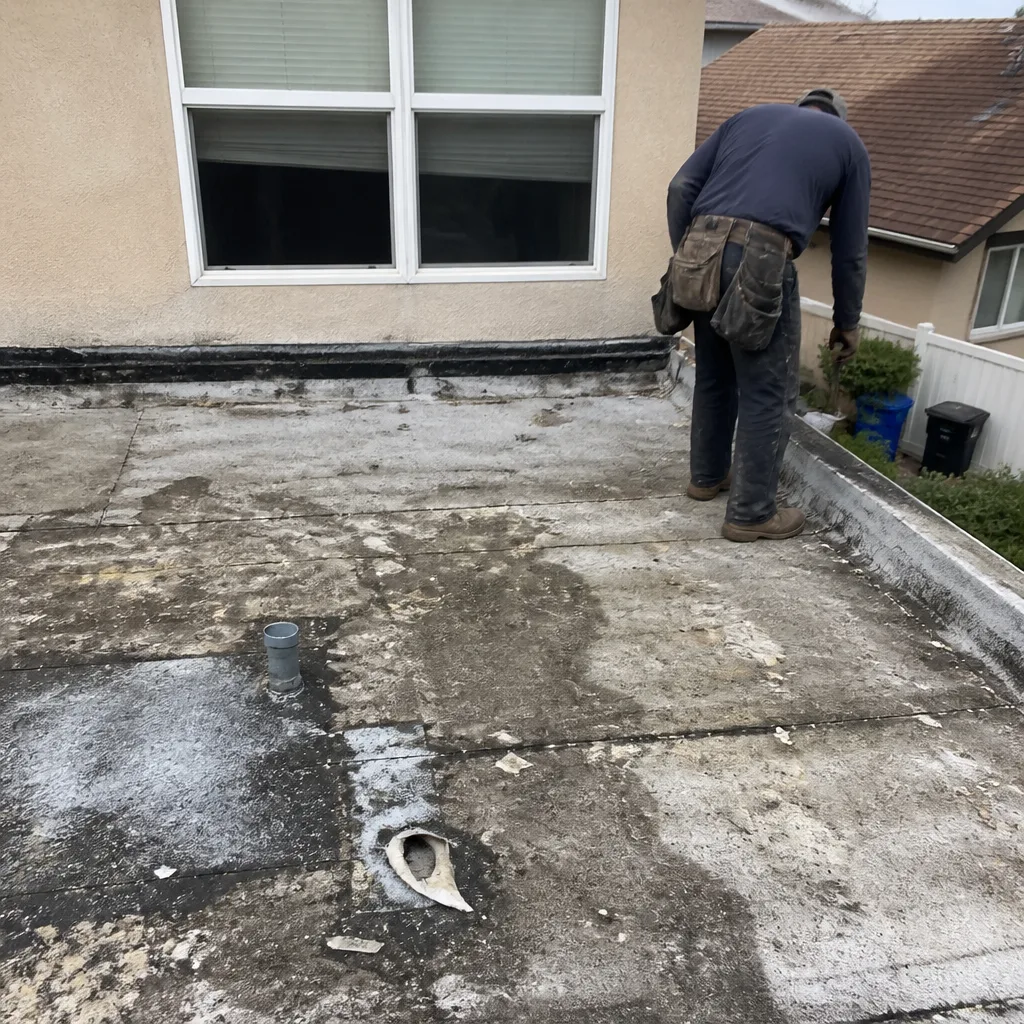
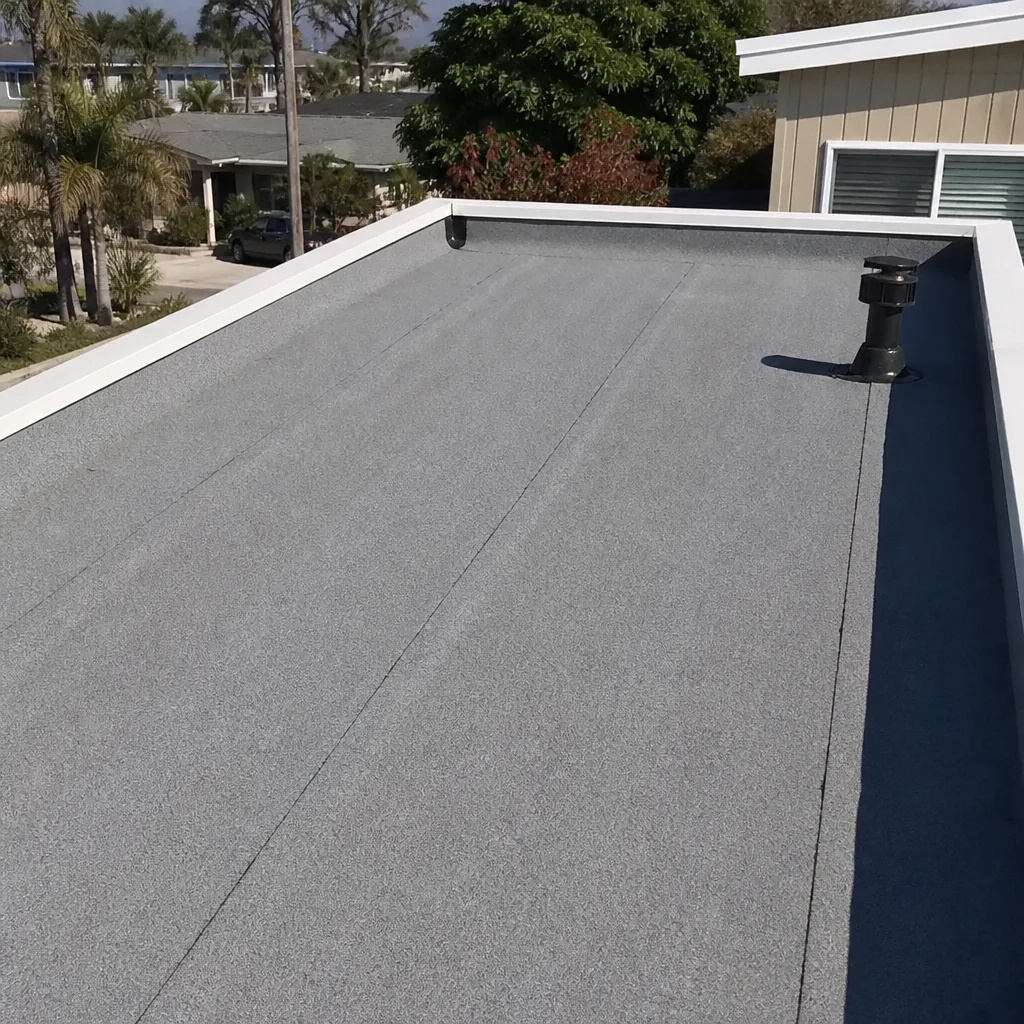
San Diego has a significant stock of midcentury homes with flat or low-slope roofs, concentrated in neighborhoods like Clairemont, Allied Gardens, and parts of La Jolla. Flat roofs are particularly vulnerable to a failure mode that generic roofing guides rarely mention: blistering.
Roof blistering happens on built-up and modified bitumen roofs when trapped moisture beneath the roof membrane heats up during the day and expands, creating bubbles or raised areas in the surface. San Diego’s heat waves create the perfect conditions. After a period of heavy marine-layer mornings, moisture gets trapped under the membrane. Then a heat wave arrives, surface temperatures climb past 130 degrees, and the trapped moisture expands. The roof surface lifts.
Blisters matter before water gets in. A blister is not yet a leak, but it’s a failure waiting to happen. The raised membrane is now a fragile point: a maintenance worker’s footstep, a wind-blown branch, or simple UV degradation at the raised edges can puncture it. Once punctured, the trapped moisture has an exit point and the roof begins actively leaking. Worse, blisters often indicate that the underlying insulation or substrate is already saturated, which means the roof’s thermal performance and structural integrity are already compromised.
After a San Diego heat wave, if you can safely view your flat roof from an upper window or ladder, look for raised areas, areas where the surface appears wrinkled or bubbled, or areas where the membrane has separated at a seam. Document them and have them assessed. Small blisters can sometimes be repaired by cutting out the affected area, drying the substrate, and patching with compatible materials. Large or numerous blisters usually mean the roof has reached the end of its service life, and replacement is the honest recommendation. Any roofer who tells you otherwise is selling you a patch that will fail.
The San Diego Warning Sign Decision Tree
Not every warning sign requires the same response. Here’s a decision framework we use when homeowners call and describe what they’re seeing. It divides observations into three action categories.
Category 1: Watch and Document
These warning signs don’t require immediate action, but they do require documentation. Take photos with a date stamp, store them somewhere you’ll remember, and recheck annually or after major storms.
- Cosmetic tile cracking limited to surface fissures on individual tiles with no through-cracks and no tile movement.
- Minor granule accumulation in gutters during the first rain of the season, with no dry-weather granule runoff.
- Rust stains or discoloration on flashing that is still intact and still effectively directing water.
- Slight moss or algae growth on the north or shaded side of the roof, with no visible lifting of the roofing material.
Category 2: Professional Inspection Within 30 Days
These warning signs indicate an active problem that will worsen, but not imminently. Schedule an inspection within the month. Repairs at this stage are typically still localized and modest in cost.
- Efflorescence below the roofline on stucco or masonry walls.
- Granule buildup in downspouts during dry months, indicating accelerated shingle degradation.
- Hairline ceiling stains that appear or worsen after marine-layer nights.
- Missing, lifted, or visibly shifted ridge cap along the peak of the roof.
- Structural tile cracking: through-cracks, broken corners, or tile debris in gutters.
- Paint bubbling at the top of exterior walls below the roofline.
- Small roof blisters on flat or low-slope roofs, especially after heat waves.
Category 3: Call Today
These warning signs indicate active water intrusion or the imminent risk of it. Call a professional immediately. Water is entering the home or the roof structure now, and every day of delay adds to the repair cost.
- Active dripping or water running from any ceiling or wall inside the home.
- Visible daylight through the roof when looking from the attic.
- Sagging or bowing in any section of the roof line or ceiling.
- Tiles sliding off the eave, exposing the underlayment beneath.
- Large or widespread blisters on a flat roof that have ruptured or are at risk of rupture.
- Water stains that are spreading rapidly across a ceiling or wall surface during or after rain.
What San Diego Roof Repairs Actually Cost
Here are the real price ranges for common roof repairs in San Diego as of 2025. These are the numbers we put in writing before any work starts, and they reflect what homeowners across the county can expect from a licensed contractor doing the job once, correctly.
- Isolated tile replacement (1-5 tiles): $350 – $700, depending on accessibility and tile type.
- Ridge cap repair or replacement (under 25 linear feet): $400 – $1,200 if caught early; $2,500 – $5,000 if water damage has spread to the ridge board and sheathing.
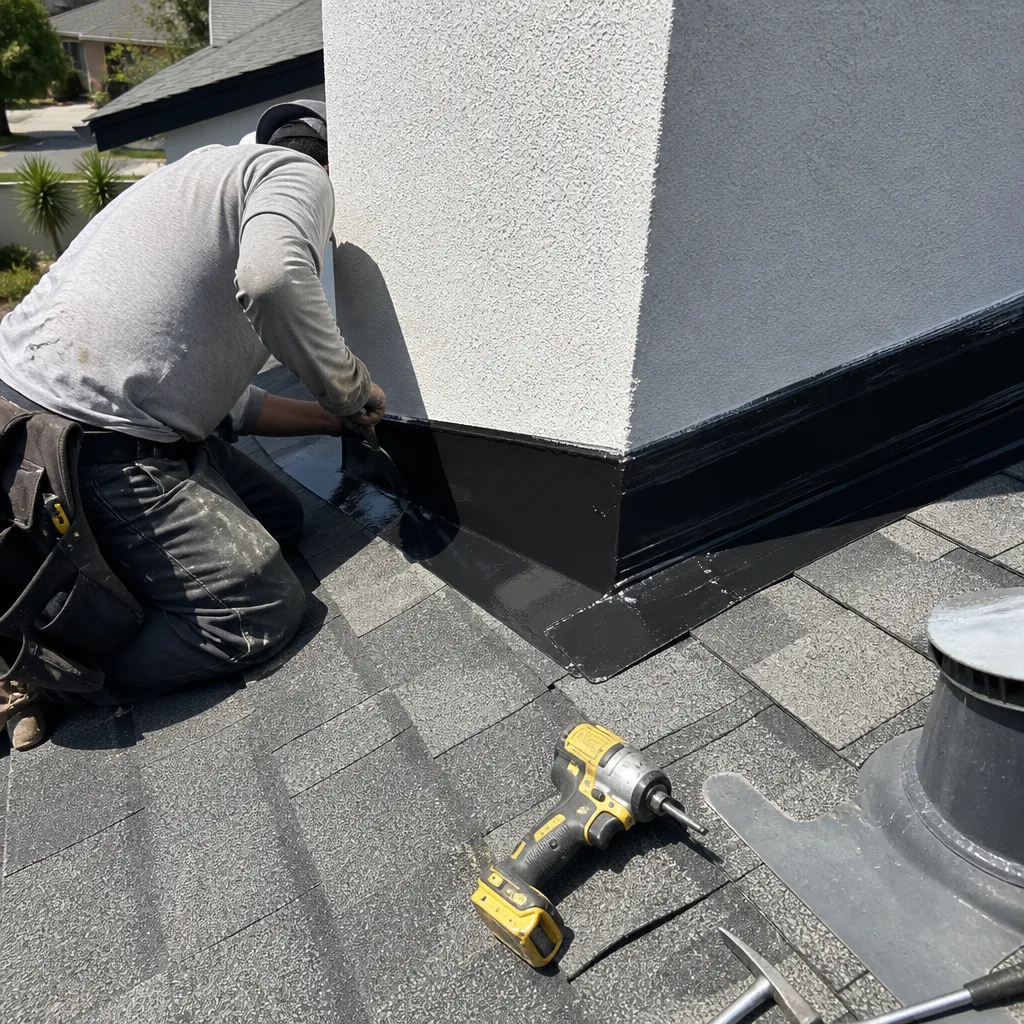
- Flashing repair at a chimney, skylight, or roof-to-wall transition: $450 – $1,500 for isolated flashing work. Full re-flashing of a chimney with new counter-flashing: $1,200 – $3,000.
- Flat roof patch or small blister repair: $500 – $1,200 for a localized repair on an otherwise sound roof.
- Underlayment renewal under a tile section (under 10 squares): $2,500 – $6,000, depending on tile condition and whether tiles can be reused.
- Full roof replacement (asphalt shingle, average San Diego ranch home): $9,000 – $22,000, with the range driven by material choice among seven manufacturers we work with, including GAF, CertainTeed, and Boral.
- Full roof replacement (tile underlayment and re-set): $18,000 – $45,000, depending on tile type, roof complexity, and whether original tile can be salvaged.
These numbers assume the problem is caught at the stages described in this guide. The same issues left for twelve to twenty-four months typically move into the next price bracket up. A $600 ridge cap repair becomes a $4,000 sheathing replacement. A $900 flashing repair becomes a $7,000 wall cavity repair with stucco remediation. That’s the cost curve this guide exists to help you avoid.
One point worth stating plainly: written pricing happens before work starts, every time, with no exceptions. If a contractor won’t put a price in writing before touching your roof, that’s not a pricing policy. That’s a warning sign of its own. The roof replacement team in San Diego at Tilehurst does it the same way on a $600 repair or a $40,000 redeck.
Common Mistakes to Avoid
- Ignoring dry-weather granules because “it hasn’t rained.” In San Diego, granule loss during dry months is a stronger signal than granule loss during storms, because it means degradation has progressed far enough to occur without the mechanical action of rain. If you see granules at a splash block in August, the clock is ticking.
- Attributing ceiling stains to plumbing before ruling out the roof. The diagnostic sequence in this guide takes ten minutes and costs nothing. Running it before you call a plumber can save you a service call and get the right contractor on site sooner.
- Painting over efflorescence or water stains. Paint seals the evidence but does nothing to stop the water path. The staining will return, and by the time it does, the hidden damage has grown. Address the water source first, then repaint.
- Walking on a tile roof to “check things out.” Tile roofs in San Diego are fragile, especially older ones. A single misstep can crack multiple tiles and turn a visual inspection into an active leak. Stay on the ground or hire a professional.
- Assuming tile means permanent. Tile is durable, but the underlayment beneath it is not. If your tile roof is past twenty-five years old and you’ve never had the underlayment assessed, you’re running on borrowed time. The tile will outlast the waterproofing beneath it.
- Accepting a verbal quote. A verbal quote is not a quote. It’s a conversation. In San Diego, where roofing contractors are plentiful and quality varies widely, the written price before any work starts is the single clearest signal that you’re dealing with a contractor who stands behind the job.
- Waiting for the next rain to “confirm” a leak. San Diego’s rain is seasonal and unpredictable. If the underlayment or flashing is compromised, water is getting in during marine-layer events and irrigation overspray even when it’s not raining. Waiting for a storm means waiting months while damage accumulates.
When to Call a Professional
Call a professional when any Category 2 or Category 3 warning sign from the decision tree above is present. Call the same day for active water intrusion, visible roof sagging, or tiles sliding off the eave. Call within the month for efflorescence, dry-weather granule runoff, ceiling stains that follow the marine layer, lifted ridge cap, or structural tile cracking. If you’re unsure which category your observation falls into, call anyway. A conversation costs nothing, and a professional who knows San Diego roofing can usually categorize what you’re describing over the phone. Tilehurst Roofing San Diego offers free estimates in San Diego, and a live person answers every call, 24 hours a day, seven days a week. Call (619) 393-3877 with your observations, and we’ll help you figure out what needs attention now and what can wait.
Frequently Asked Questions
Most San Diego roofing contractors offer free estimates for roof inspections related to a specific concern or potential repair. Estimates are typically free when the inspection is part of scoping a repair or replacement project. Tilehurst Roofing San Diego provides free estimates for all roofing work, including warning-sign assessments. Call (619) 393-3877 to schedule one.
The first signs are usually cosmetic cracking on tile surfaces, granule-like dust from degrading mortar at the eave line, and a soft crunching sound when walking near the eaves. By the time visible tiles are cracked through or missing, the underlayment has usually already been compromised. If your tile roof is over twenty-five years old and you’ve noticed any of these signs, schedule an assessment.
Yes, particularly during marine-layer season from May through July. Morning fog condenses on roof surfaces and can enter through compromised underlayment, flashing gaps, or failed ridge cap. Interior evidence includes hairline ceiling stains that appear in the morning and fade by afternoon. If you’re seeing stains during dry weather, there’s a roof problem that needs attention before the rainy season arrives.
The tile itself can last fifty to eighty years or more, but the underlayment beneath it typically lasts twenty to thirty years in San Diego’s UV climate. If your tile roof is approaching thirty years old and has never had its underlayment replaced, you may need a re-roof even if the tile still looks good. Material choice matters here; options from manufacturers like Tamko and Boral offer different life expectancies and performance characteristics worth comparing.
Roof blistering appears as raised, bubble-like areas on the surface of built-up or modified bitumen flat roofs. They’re most visible after heat waves, when trapped moisture beneath the membrane expands. Blisters can range from a few inches to several feet across. Small blisters may be repairable; widespread blistering usually indicates the roof has reached the end of its service life.
It depends on the age of the roof, the extent of the damage, and the condition of the underlayment and decking. If your roof is under fifteen years old and showing isolated warning signs, targeted repair is usually the right call. If it’s over twenty-five years old and showing multiple signs across different roof areas, replacement is usually more cost-effective than a series of escalating repairs. A written estimate from a qualified contractor will give you the comparative numbers, and any reputable contractor will present both options without pressure. If a roofing contractor in San Diego pushes you toward one option without showing you the math on both, get a second opinion.
The Bottom Line
San Diego roofs don’t usually fail with drama. They fail slowly, in ways designed to be missed: a crunch underfoot, a faint stain at dawn, a chalky smear on stucco, a handful of granules at the downspout in August. The homeowners who catch these signs early spend hundreds instead of thousands. The ones who wait spend thousands instead of tens of thousands. Every warning sign in this guide has a defined response, and most of them fall into the category of “worth checking within the month.” If you’ve read this far and something in this guide matches something you’ve seen on your own home, call a San Diego roofing company you can hold to a written price and a written guarantee. Call and ask your questions. A live person will answer. Call (619) 393-3877 today.
Written by Greg Holloway, Owner at Tilehurst Roofing San Diego, serving San Diego since 2000.
See the difference
 Before
 After
After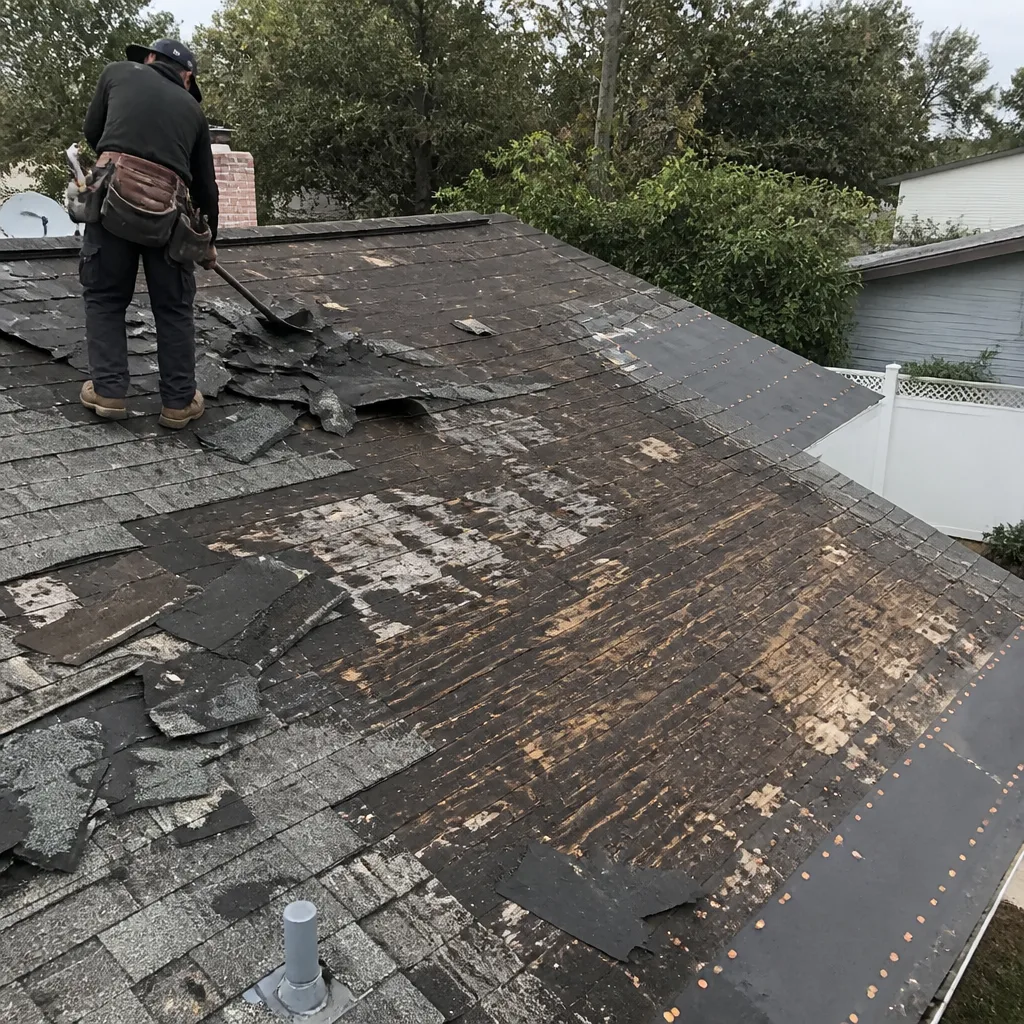 Before
 After
After Before
 After
After